

Introduction
In the development of sports footwear, brands usually focus heavily on:
- Upper materials
- Midsole cushioning technology
- Outsole grip performance
- Shoe appearance and design
These elements are certainly important.
However, one component that is often underestimated is the insole.
The insole is the direct contact layer between the foot and the shoe interior.
It influences how consumers perceive:
- Comfort
- Support
- Cushioning
- Overall footwear quality
For sports footwear brands, the insole is not simply a removable layer inside the shoe.
It is part of the overall performance system.
A well-developed insole can help improve:
- Running comfort
- Walking experience
- Foot stability
- Fatigue reduction
As consumer expectations continue to increase, brands need to rethink the role of insoles in product development.
Instead of selecting standard insoles at the final production stage, leading brands are involving insole suppliers earlier in the development process.

1. Why Insoles Have Become More Important in Sports Footwear
The sports footwear market has become increasingly competitive.
Many brands now compete not only through appearance but through functional performance.
Consumers expect footwear to provide:
- Better comfort
- Longer wearing experience
- Improved support
- More specialized functions
This creates opportunities for brands to differentiate through components such as insoles.
Consumer Expectations Are Changing
Modern consumers are more aware of footwear performance.
They increasingly consider:
- Foot comfort
- Arch support
- Cushioning experience
- Breathability
- Fatigue reduction
A basic flat insole may no longer satisfy users who expect higher performance.
Product Differentiation Is Becoming More Difficult
Many footwear brands use similar:
- Upper materials
- Manufacturing processes
- Design styles
As a result, functional components become important differentiation opportunities.
A customized insole solution can help brands create unique product value.
Insoles Influence Overall Footwear Performance
Although the insole represents only one component of the shoe, it affects the interaction between:
- Foot
- Shoe structure
- Ground impact
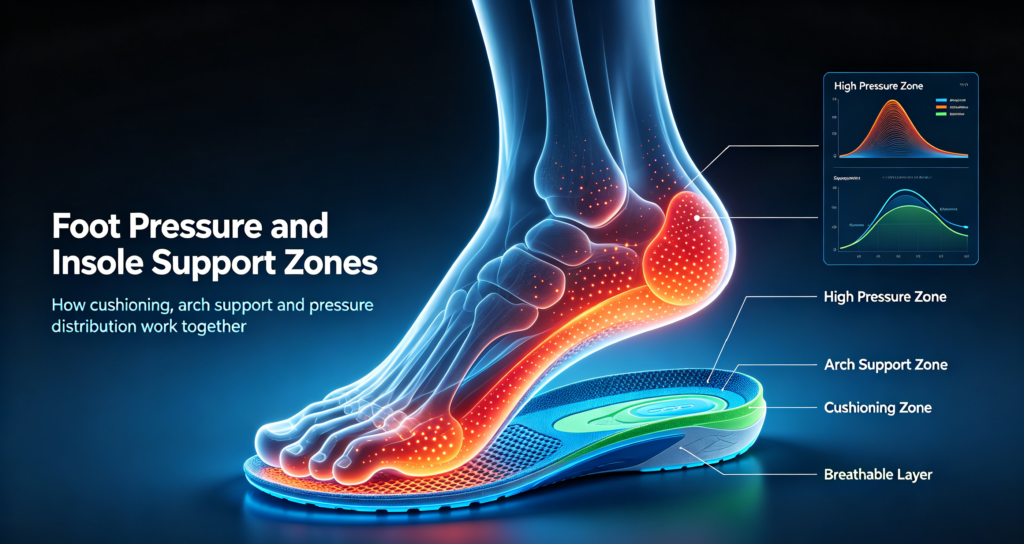
A properly designed insole can improve:
- Pressure distribution
- Stability
- Comfort
- Motion support
2. Insoles Support Different Sports Footwear Categories
Different footwear categories require different insole solutions.
A successful sports footwear brand should not use one standard insole across all products.
Running Footwear
Running shoes require:
- Impact protection
- Energy return
- Lightweight performance
Recommended insole features:
- High-resilience foam
- Shock absorption structures
- Moisture management fabrics
The goal is to improve comfort during repeated foot impact.
Training and Gym Shoes
Training footwear requires:
- Stability
- Support
- Balanced cushioning
Insole solutions may focus on:
- Structural support
- Moderate cushioning
- Better foot control
Outdoor and Hiking Footwear
Outdoor shoes require:
- Long-term comfort
- Durability
- Stability
Suitable insole features include:
- Arch support
- Moisture control
- High-density foam
Walking and Lifestyle Sports Shoes
These products focus on:
- Daily comfort
- Lightweight feeling
- Long wearing time
Suitable solutions include:
- Memory foam
- Soft PU foam
- Pressure distribution structures
3. How Insoles Improve Product Performance
A strategically designed insole can improve several key footwear performance factors.
Cushioning Performance
One of the main functions of insoles is improving comfort through impact management.
Materials such as:
- PU foam
- EVA foam
- Memory foam
can help absorb pressure during movement.
Pressure Distribution
During walking or running, pressure is not evenly distributed across the foot.
Poor pressure distribution may cause discomfort.
Functional insoles can help manage:
- Heel pressure
- Forefoot pressure
- Arch support
Foot Stability
Support structures inside insoles can improve:
- Foot positioning
- Balance
- Motion control
This is especially important for:
- Outdoor footwear
- Training shoes
- Work-performance footwear
Fatigue Reduction
For users who wear footwear for long periods, reducing foot fatigue becomes increasingly important.
Examples:
- Workers standing all day
- Outdoor users
- Long-distance walkers
A better insole design can improve long-term wearing comfort.
4. Why Brands Should Involve Insole Suppliers Earlier
Many brands involve suppliers only after the shoe design is completed.
This limits opportunities for optimization.
A better approach is early supplier involvement.
Traditional Development Process
Typical process:
Brand designs shoe → Selects standard insole → Begins production
Problems:
- Limited customization
- Missed optimization opportunities
- Less product differentiation
Strategic Development Process
Improved process:
Brand concept → Supplier collaboration → Material selection → Prototype testing → Final production
Advantages:
- Better performance
- Faster improvement
- Reduced development risks
Supplier Technical Input
Experienced suppliers can contribute:
- Material recommendations
- Structure optimization
- Manufacturing solutions
- Performance testing
This creates better final products.
5. Selecting the Right Insole Technology for Product Positioning
Different market positions require different insole strategies.
Entry-Level Sports Footwear
Focus:
- Cost efficiency
- Basic comfort
Suitable solutions:
- EVA insoles
- Standard foam structures
Mid-Range Sports Footwear
Focus:
- Better comfort
- Improved user experience
Suitable solutions:
- PU foam
- Memory foam
- Support structures
Premium Performance Footwear
Focus:
- Advanced technology
- Product differentiation
Suitable solutions:
- High-performance foam
- Carbon fiber support
- Customized ergonomic structures
A clear insole strategy helps brands create product tiers.
6. Functional Insole Technologies Brands Should Consider
Sports footwear brands can explore different functional technologies.
Memory Foam Technology
Benefits:
- Comfort improvement
- Pressure distribution
- Personalized feeling
Applications:
- Lifestyle sports footwear
- Walking shoes
PU Foam Technology
Benefits:
- Durability
- Resilience
- Long-term cushioning
Applications:
- Performance footwear
- Premium products
Arch Support Structures
Benefits:
- Improved stability
- Better foot support
Applications:
- Outdoor footwear
- Long-distance footwear
Antibacterial and Moisture Management
Benefits:
- Better hygiene
- Improved wearing experience
Applications:
- Sports shoes
- Daily footwear
Carbon Fiber or TPU Support
Benefits:
- Structural reinforcement
- Lightweight support
Applications:
- Performance-oriented footwear

7. How Brands Can Collaborate With Insole Suppliers
Successful cooperation requires more than purchasing finished products.
Brands should collaborate in several areas.
Product Development
Work together on:
- Material selection
- Structure design
- Performance goals
Testing and Validation
Evaluate:
- Comfort
- Durability
- Compression recovery
- User feedback
Continuous Improvement
After launch, analyze:
- Consumer feedback
- Product performance
- Market response
Then improve future generations.
8. Future Trends in Sports Footwear Insoles
The insole market will continue evolving with new technologies.
Future trends include:
Sustainable Materials
Including:
- Recycled foam
- Bio-based materials
- Eco-friendly fabrics
Lightweight Performance
Brands will continue seeking:
- Lower weight
- Better cushioning
- Higher energy return
Personalized Footwear Solutions
Future development may include:
- Foot scanning
- Customized support
- Individualized designs
Smart Footwear Integration
Potential developments:
- Pressure sensing
- Temperature regulation
- Performance monitoring
【图片插入位置】
图片描述:展示未来鞋垫技术趋势,包括环保材料、轻量化设计和智能鞋垫应用。
Practical Checklist for Sports Brands Developing Insoles
Product Strategy
□ Define footwear category requirements
□ Identify target consumer needs
□ Select appropriate performance goals
Supplier Cooperation
□ Evaluate technical capability
□ Involve suppliers early
□ Conduct prototype testing
Quality Management
□ Test durability
□ Confirm material consistency
□ Monitor production quality
Innovation Planning
□ Explore new materials
□ Develop differentiated solutions
□ Follow market trends
Conclusion
For sports footwear brands, insoles should no longer be viewed as a simple accessory.
They are an important product component that influences:
- Performance
- Comfort
- Brand differentiation
- Consumer satisfaction
By integrating insole development into the overall product strategy and working closely with capable suppliers, brands can create footwear products with stronger market competitiveness.
The future of sports footwear will not only depend on better designs and materials.
It will depend on how effectively brands combine every component into a complete performance system.


