Most buyers pick an insole from a catalogue the way they pick a color. The mold is the step that actually decides what the product can be — the thickness profile it can hold, the arch geometry it can keep, and whether the hundredth pair matches the first. Material choice gets the conversations; the mold quietly sets the limits.
The mistake we see most often is starting quotes before the tooling scope is fixed. Three prices are collected and compared, and only later does the buyer discover they were not for the same thing — one assumed a prototype mold, one a full size run, one an existing mold with a new label. A mold program compared on price before scope is a comparison of nothing.
The Tooling Decision That Decides Everything
Before any machining starts, one decision shapes the whole program: what the tooling has to prove, and for whom. Insole tooling generally falls into three scopes, and they are not interchangeable.
| Tooling scope | What it produces | Best for | Trade-off |
|---|---|---|---|
| Prototype / single-size tooling | Samples in one reference size | Validating geometry, thickness and material before committing | Fastest to start, but proves nothing about the size run |
| Production tooling, full size run | Every size in the range, at volume | Mass production programs | Highest tooling cost; every change after machining is expensive |
| Existing mold + private label | An established geometry with your brand and packaging | Launching a line without new geometry | Lowest cost and risk, but limited differentiation |
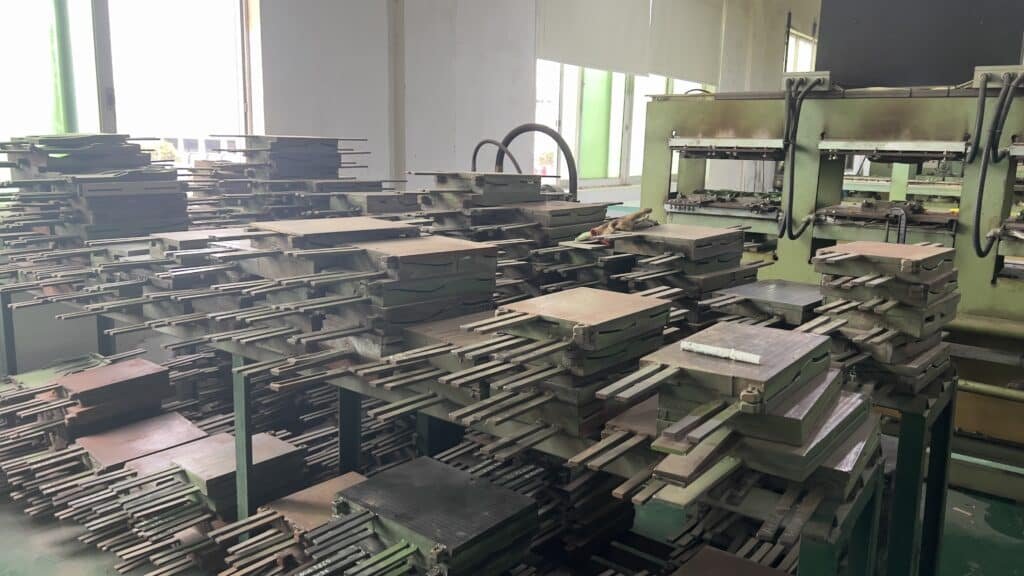
The scope changes what gets quoted, what gets machined, and what a revision costs later — a production mold carrying a size run is a different object from a prototype, with more cavities and far less room for trial and error.
Two implications for buyers: fix the tooling scope before requesting quotes, and decide whether the first version needs to be production-grade at all. Skipping validation does not save the prototyping cost — it moves that cost into revisions on production tooling, where changes are slower and more expensive.
From Geometry Data to First Shots
The development path is short in steps and long in decisions. Each stage exists to kill a specific kind of error before it becomes expensive.
Design intake. The program starts with geometry, not samples: the shoe’s internal volume, the intended thickness map, the arch profile, the target material and density, and the mileage the product must survive. A brief that arrives with only a reference sample forces the factory to reverse-engineer the rest.
CAD and 3D modeling. The intake data becomes a surface model. This is where the thickness map and the arch geometry get locked as numbers rather than opinions, and where conflicts surface early — a heel cup that is deep enough for stability may not fit the shoe’s vertical room, and that is cheap to discover on screen.
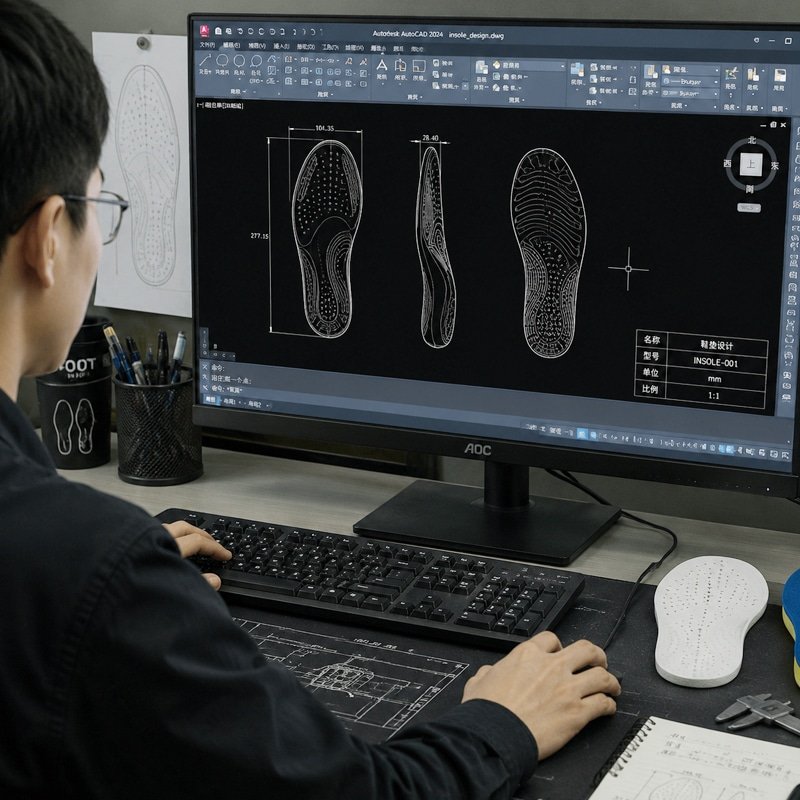
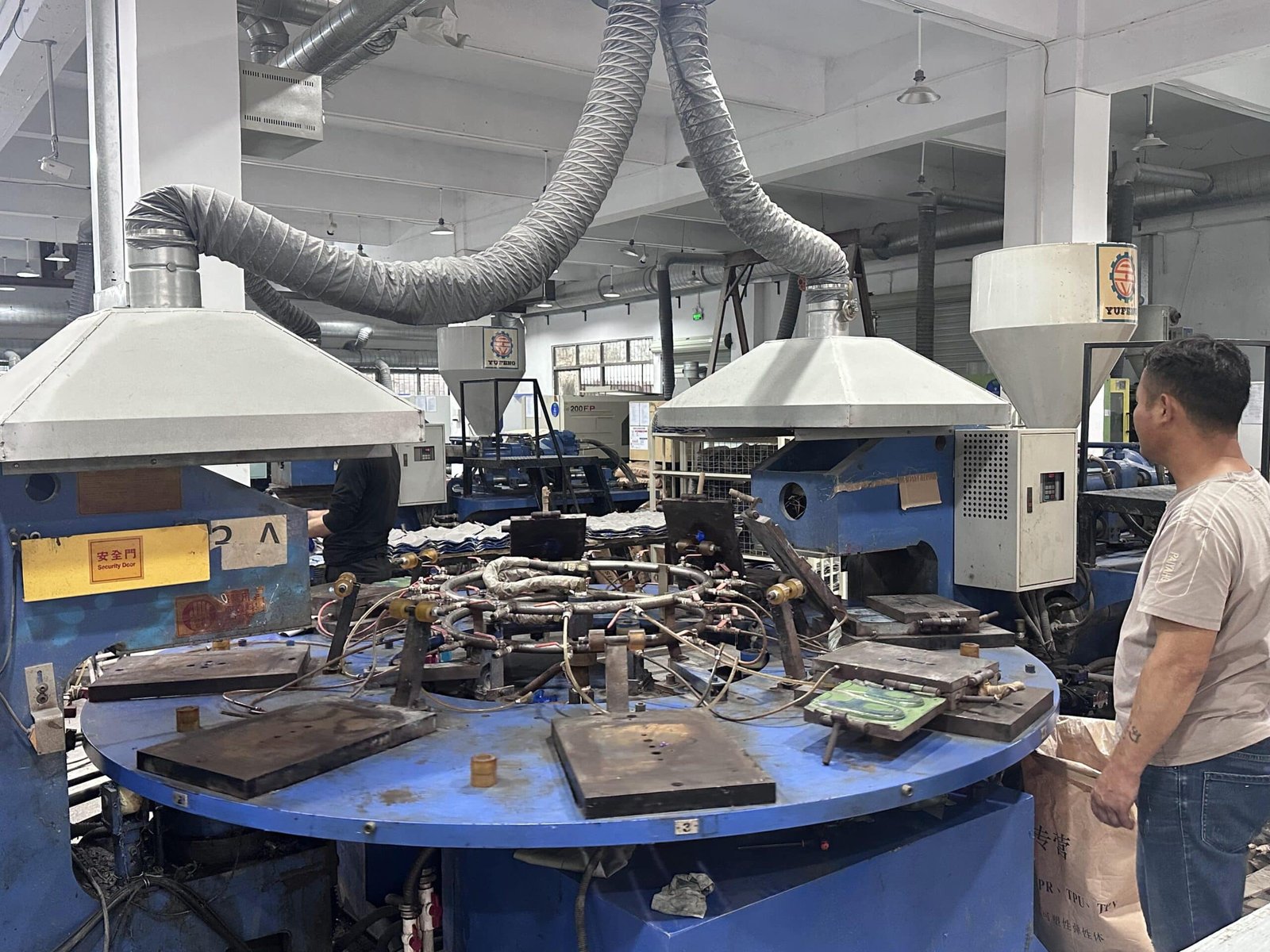
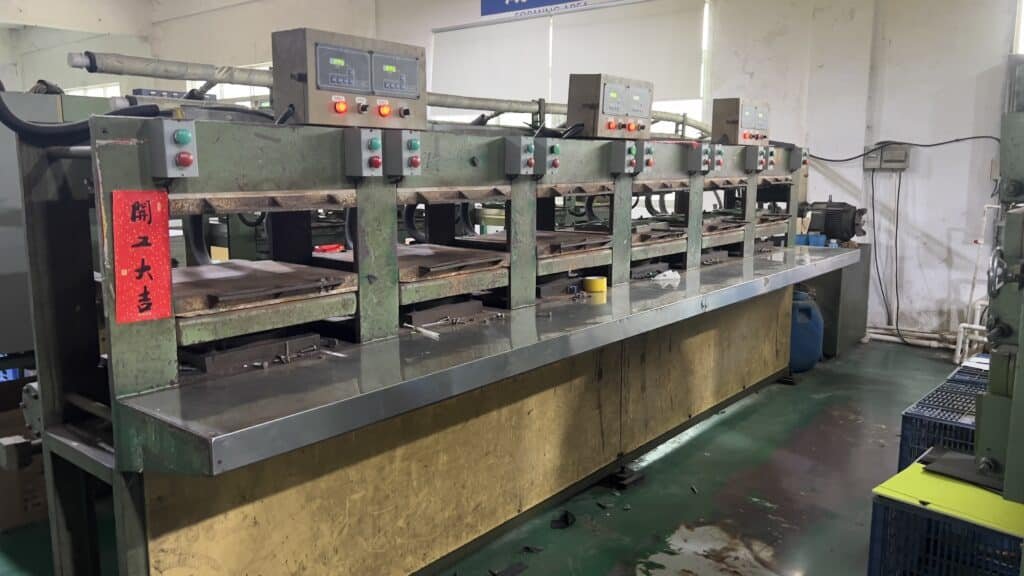
Tooling machining. The model drives CNC machining of the mold, commonly in aluminium for insole work. Machining quality decides more than surface finish: it sets how consistently each cavity reproduces the model.
First shots and samples. The mold is trial-fired in the target material. First samples are checked against the model for thickness, weight and geometry — and in foam programs, against compression set behavior, since a material that measures well before molding can behave differently after it.
Revision and release. Findings feed adjustments, and the cycle repeats until samples pass. Only then does the tooling become a production asset rather than an experiment.
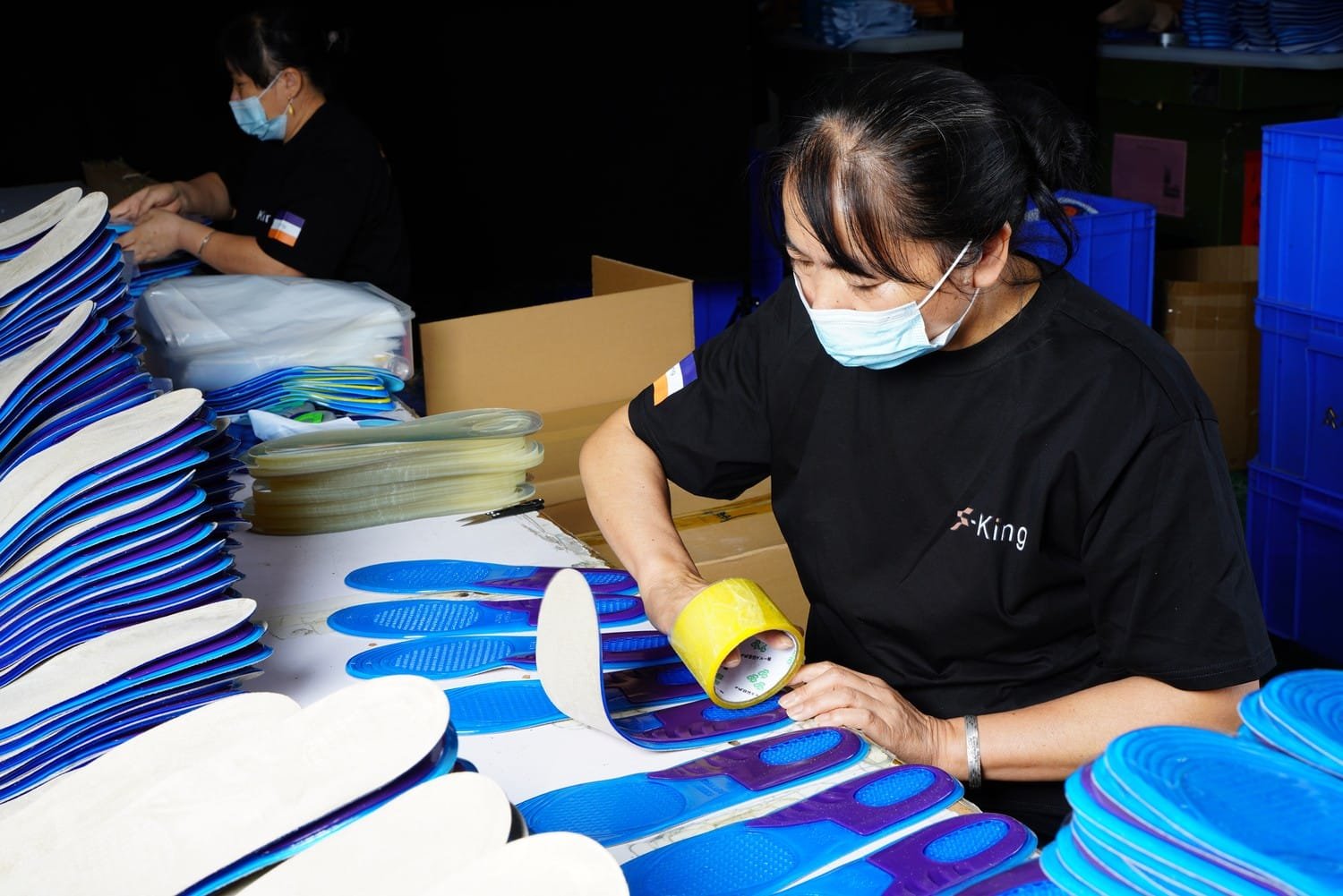
You can see where this fits in the wider process on our production line.
What the Mold Actually Controls
A mold is not just a shape. It is a set of tolerances, and each one lands somewhere in the finished product.
| Mold-controlled variable | What it affects | Common failure when it is wrong |
|---|---|---|
| Thickness profile | Cushioning feel, in-shoe fit, heel height | Insole sits high; foot rides out of the heel cup |
| Parting line position | Where the two mold halves meet the product | Flash line on the wearing surface; trimming marks |
| Draft and demolding geometry | Whether the part releases cleanly | Warped edges, torn arch sections, slow cycles |
| Shrinkage allowance | Final dimensions across the material | Size deviation that grows worse along the size run |
| Cavity consistency | Whether pair 1,000 matches pair 1 | Density or thickness drift between cavities over time |
This is why a mold is a specification conversation, not a drawing one: two suppliers can machine the same geometry and produce insoles that behave differently under load, because the tolerances — and the discipline around holding them — live in details the drawing does not show.
Where Mold Projects Stall
Most mold programs that run late do so for reasons that were visible on day one.
Quoting before scope is fixed. The most common — and the reason the opening comparison of three prices means nothing.
Geometry that cannot be demolded. An aggressive undercut looks good in CAD and will not release from the cavity. The fix is a geometry compromise, and it is much cheaper to accept on screen than after machining.
Size-run decisions made late. Which sizes ship first, and which are deferred, changes the tooling plan. Deciding it after machining means paying twice.
Sample approvals without measurable criteria. “Feels good” is not an approval standard. Samples approved on feel get reopened on feel, and approval loops are where programs lose the most time.
Material chosen after the mold. Shrinkage is material-specific. Locking the geometry before locking the material means the mold is machined to a number that changed.
Manufacturer Insight
From our side, the programs that run smoothly have one thing in common: the buyer arrived with the three questions settled — tooling scope, size run, and target material — before the first quote. The programs that struggle are rarely short of good design; they are short of decisions.
We test against compression set first. On our own running programs, compression set is the number we trust most, because it predicts field life better than any other single property. A mold can be dimensionally perfect and still produce a product that goes flat at 200 miles if the material spec was never written for the mileage.
We push revisions to happen in CAD, not on steel. Every change requested after machining costs time in a way screen changes do not — which is why our intake asks for the thickness map and the shoe’s internal volume up front. An awkward conversation about vertical room in week one beats a rework order in week six.
We separate what the mold proves from what it produces. A first-article approval and a production release are different milestones, and collapsing them is how programs end up with a signed-off sample and an inconsistent size run.
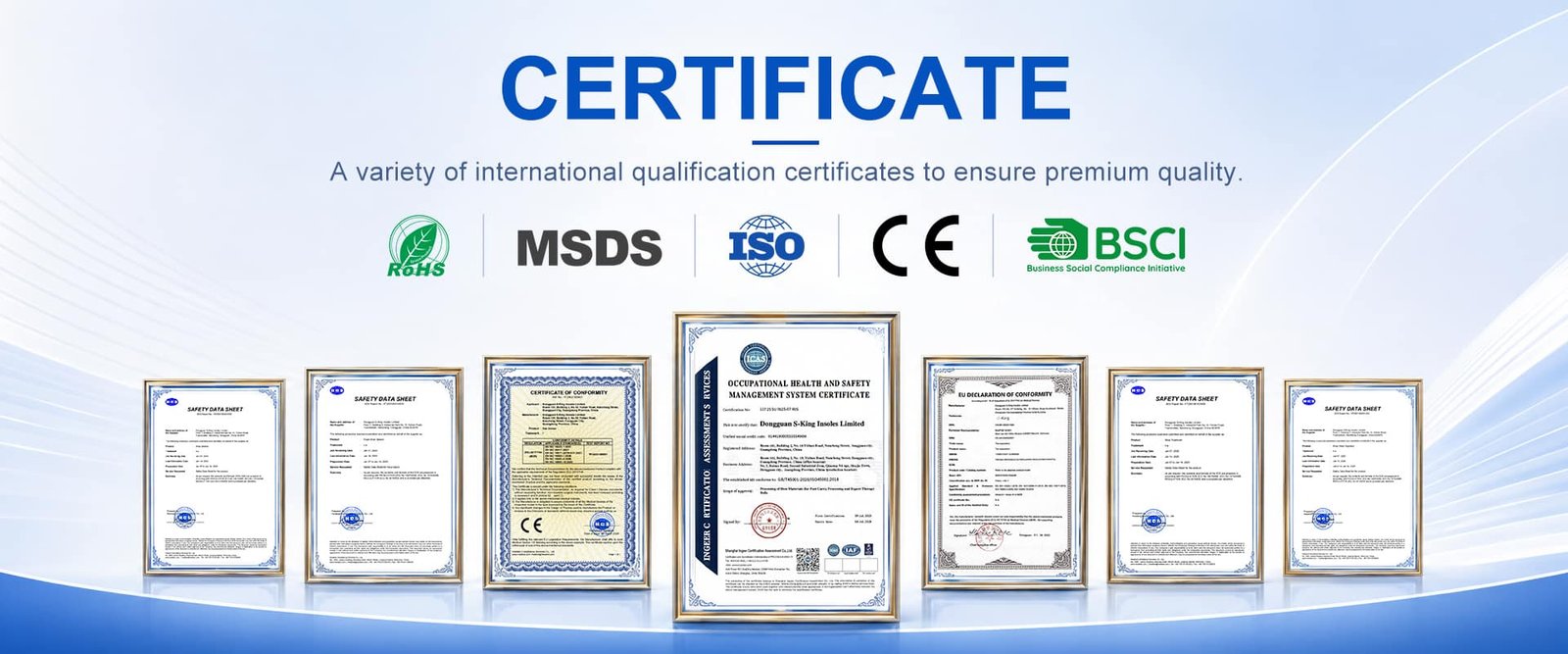
S-King has been manufacturing insoles since 2012, producing over 3 million pairs annually from an MOQ of 100 pairs. We handle material selection, mold development and private label construction in-house, which means the geometry, the material spec and the tooling are decided by the same team — the practical benefit being that what is quoted is what gets machined. The factory is CE-certified, BSCI-audited, with ISO 45001 and SDS documentation. If you are scoping a mold program, start with the tooling decision on our OEM/ODM page.
Frequently Asked Questions
Who owns the mold once it is paid for?
Mold ownership is contractual, not an industry default — terms differ between manufacturers and should be written into the RFQ before payment. The agreement should cover ownership, use rights and what happens if you move production later. Agreeing this after the mold exists removes your leverage.
Does every shoe size need its own mold?
It depends on the construction. Molded constructions typically require tooling per size or size break, which is why the size run decision drives tooling cost as much as geometry does. Launching with the sizes that carry volume and extending later is the normal way to control the first investment.
What should we prepare before starting mold development?
The geometry inputs — target thickness map, arch profile, the shoe’s internal volume — plus the material and density target, the mileage the product must survive, and the intended size run. A brief that covers these arrives as a program; one that does not arrives as a series of assumptions. Our insole manufacturer RFQ checklist covers the full list.
Can an existing mold be used for our brand?
Yes — private label on an established geometry is the fastest route to market and the lowest tooling risk. The trade-off is differentiation: your product starts from a shape your competitors can also access. MOQ for private label programs starts at 100 pairs.
The Short Version
Three things decide a mold program before any steel is cut: tooling scope (prototype, production, or private label on an existing mold), the size run, and the material spec written for the intended mileage. Fix all three before collecting quotes, keep revisions in CAD rather than on machined metal, and treat first-article approval and production release as separate milestones.
If you are scoping a custom insole program, see how we run mold development and material selection on our OEM/ODM page, or talk to our team about your tooling scope.