Custom insole MOQ is not a single number, and a supplier who states one without asking which production route you are on has answered the wrong question. The minimum is not a policy set for the market — it is the quantity at which that route’s fixed costs stop dominating the unit economics. Change the route, and the number changes.
The most common mistake is comparing suppliers on the number alone. A quote of one hundred pairs and one of three thousand are not competing offers until you know what each includes: whose mold, whose size run, whose packaging. The lower number usually hides a minimum elsewhere — a tooling charge, a per-size setup, or a development fee that is the first batch in disguise.
The Fixed Cost That Every Route Has to Recover
Every program carries costs that do not scale with quantity: the mold, size run tooling, sampling rounds, specification work, packaging setup and first-article approval. They get paid either up front by the buyer or through the unit price across the order. MOQ is the point where the second arrangement produces a unit price the market accepts.
This is why one factory can quote a low minimum on one program and a high one on another without either being arbitrary. A stock mold needs almost nothing recovered; a new geometry needs the whole tooling investment recovered across the first orders.
Stock Molds and Existing Models
A stock mold is a geometry the factory already produces. Nothing gets machined or proven, and the risk is close to zero because the product already exists. The buyer selects from a catalog rather than commissioning a development, which is why this route carries the lowest recovery burden and the lowest minimum.
The trade-off is differentiation: a stock geometry is available to other buyers, so your product shares its shape with products you may compete against on shelf. For a brand entering a category that is often the right trade; for a brand selling a proprietary fit it is the wrong route, however attractive the minimum looks.
Private Label on an Existing Mold
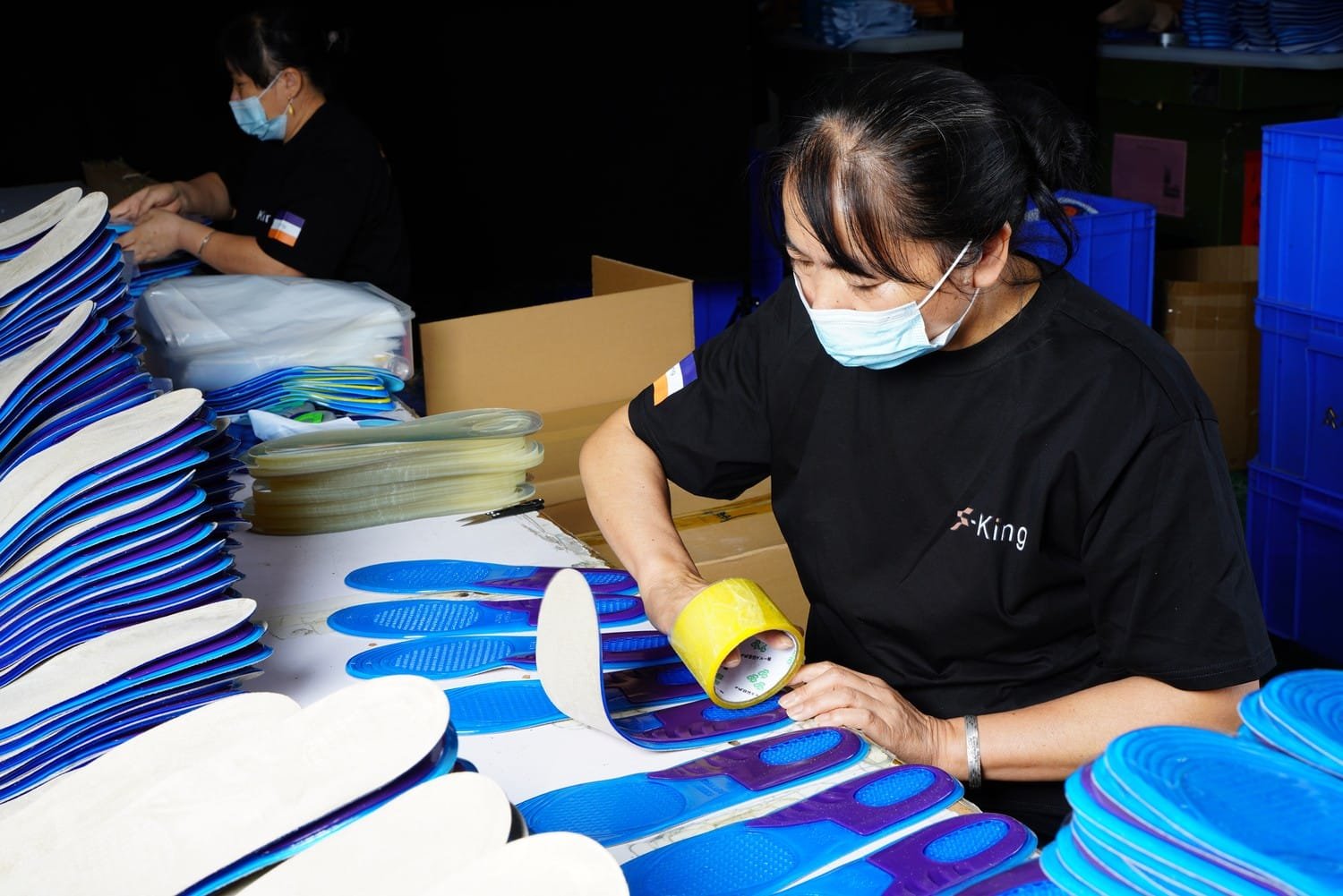
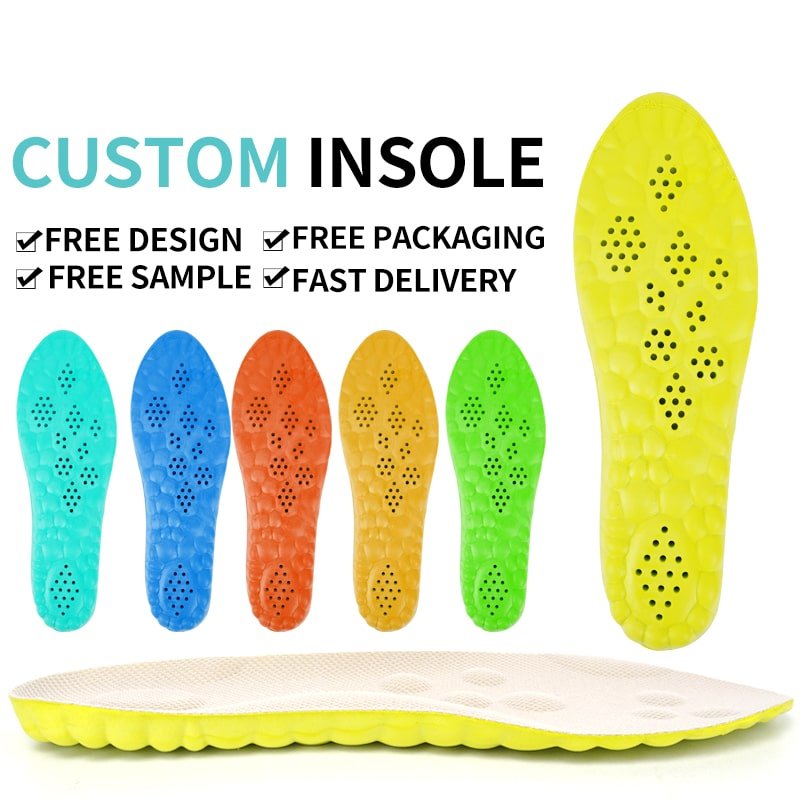
Private label sits between the two extremes: the geometry is existing, but the product becomes yours — your branding, top cover, packaging and specification. Because the mold does not need to be created, the recovery burden stays modest, and on this route our minimum starts at one hundred pairs.
That number is meaningful because it is not zero. One hundred pairs still needs a scheduled run, prepared material and a first-article check; what it does not need is a tooling investment. Buyers who expect private label to behave like buying from stock are usually surprised that logo setup and packaging print still exist at this volume — they are just smaller.
Full Custom Tooling
Full custom is a development, not an order. A new geometry means new tooling, a size run to tool, sampling rounds to prove the design and a specification to write — each a fixed cost recovered before the unit price makes sense. The minimum here is driven by tooling scope and size run far more than by material.
Two variables dominate: how many sizes the tooling must carry, since molded constructions typically need tooling per size or per size break; and how much of the geometry is genuinely new, since a design close to an established construction can reuse known shrinkage behavior. The useful question at quoting time is therefore not “what is your MOQ” but “what is my tooling scope, and which sizes does it cover” — see how insole mold development works.
The Three Routes Side by Side
The table compares what each route asks of the buyer. Quantities appear only where we have a confirmed figure; elsewhere the driver is named, because a number without tooling scope attached is not comparable between suppliers.
| Route | What the buyer commits to | What drives the minimum | What the buyer gives up |
|---|---|---|---|
| Existing model from a stock mold | Selection from an established catalog, with branding applied | Material and packaging setup only — no tooling recovery | Exclusivity; the geometry is shared with other buyers |
| Private label on an existing mold | From 100 pairs, with your branding, top cover and packaging | Production run scheduling, logo setup and first-article approval | Proprietary fit; the shape itself stays standard |
| Full custom tooling | New tooling, a size run, sampling rounds and a written specification | Mold scope and size run — the fixed investment to recover | Time and upfront commitment, in exchange for a proprietary product |
Read the table as a sequence, not a menu. Most brands start on the first or second route, then move to full custom once the category has proven itself. Starting at the third route with no sales history is how a good product gets stuck in a warehouse.
Where Buyers Get the MOQ Conversation Wrong
Assuming a higher minimum means a worse deal. On a full custom route it is usually the honest expression of what tooling costs. The dangerous quote has a low minimum and no tooling line — the cost has not disappeared, it has moved somewhere you will find later.
Splitting a size run to lower the first order. Cutting the launch range to the sizes that carry volume is the normal way to control the first commitment. What does not work is ordering below the point where a size run can run efficiently and expecting the unit economics to hold — setup cost does not shrink with the order. The fields that make two quotes comparable are in what to include in an insole manufacturer RFQ.
Manufacturer Insight
Buyers most often ask for a proprietary product at a stock product’s minimum — the same request in opposite directions. The minimum exists because the tooling has to be paid for by someone, and what we can change is who pays it and when, not whether it exists.
The pattern that works is staging. Start with an existing model or a private label program and learn what the product actually needs — which sizes move, whether the arch profile is right — then commit to full custom tooling with a specification that came from real sales rather than a competitor’s sample. Programs that start with a full custom tool and a small first order are the ones that end up with a mold nobody orders against.
A factory that will not explain how your minimum was calculated is telling you something. You should be able to see whether you are paying for tooling, a size run, packaging setup or development work — if the number is stated as policy, ask for the breakdown.
Frequently Asked Questions
What is the minimum order for custom insoles?
It depends on the production route, not on a single factory policy. Private label on an existing mold starts at 100 pairs with us, and a stock model with your branding sits at a similar low commitment. Full custom tooling carries a far higher minimum, because the mold, size run and sampling work must be recovered across the first orders.
Why is the MOQ higher for a fully custom insole?
Because the fixed costs are larger. A new geometry needs tooling machined, a size run tooled, samples proven and a specification written. None of that scales with order size, so it must be recovered from a batch large enough to absorb it. On a stock mold almost none of it exists, which is why the minimum is lower.
Does a higher MOQ mean a better unit price?
It usually lowers the unit price, because fixed costs spread across more units — covered in our custom insole cost breakdown. But a lower unit price on stock you cannot sell is not a saving. For a first order, ask how much commitment the product justifies, not how far down the price curve you can go.
Can we order below the minimum for a first trial?
Sampling exists for that: it produces the object you need to evaluate fit, material and construction without committing to a production quantity. What a sample cannot prove is how the product performs across a real size run at production tolerance — that is what the first order is for.
The Short Version
- The route sets the MOQ, not the other way around: stock models and private label carry a low minimum because little fixed cost needs recovering, while full custom tooling carries a high one because a lot does.
- Private label with us starts at 100 pairs; full custom minimums are driven by tooling scope and size run, so ask for the breakdown rather than the number alone.
- Stage the commitment — prove the product on a low-commitment route, then move to proprietary tooling once sales tell you what the design should be.
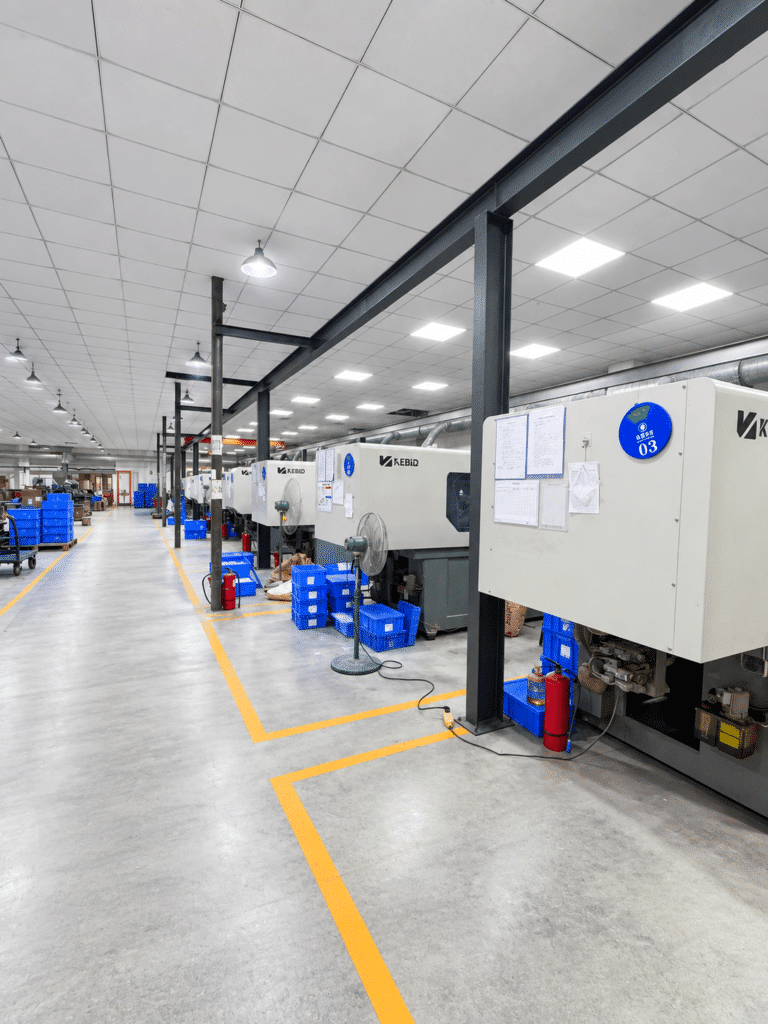
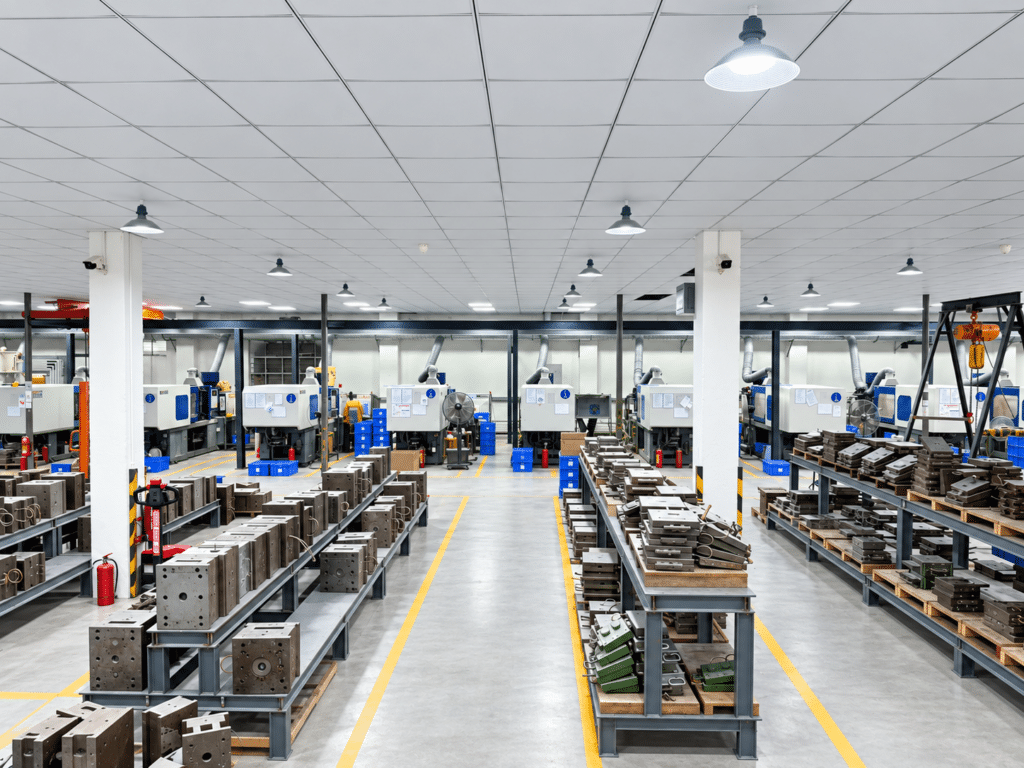
The staged path starts on our OEM/ODM services page; existing constructions are listed under products, including comfort insoles and work boot insoles. The production line page shows where the first run happens. To have a minimum costed against your tooling scope, send us the construction and the size run.