

Foot discomfort can affect every step you take—whether you’re standing at work, running a marathon, hiking trails, or simply walking around the city. Insoles are often recommended as a solution for foot pain, fatigue, and poor posture. But do they actually work?
The short answer is yes—but only when the right insole is matched to the right foot condition.
In this guide, we’ll explain the science behind insoles, the benefits they provide, and how to determine whether they’re the right solution for you.
What Do Insoles Actually Do?
An insole is an insert placed inside a shoe to improve comfort, support, and foot alignment. While some shoes include basic factory insoles, aftermarket insoles are specifically designed to solve various foot-related problems.
A quality insole can help:
- Improve arch support
- Absorb shock during walking or running
- Reduce pressure on the heel and forefoot
- Improve overall foot alignment
- Increase comfort during prolonged standing
- Reduce fatigue caused by repetitive movement
Rather than changing the shoe itself, insoles optimize how your feet interact with the ground.
Can Insoles Really Reduce Foot Pain?
For many people, yes.
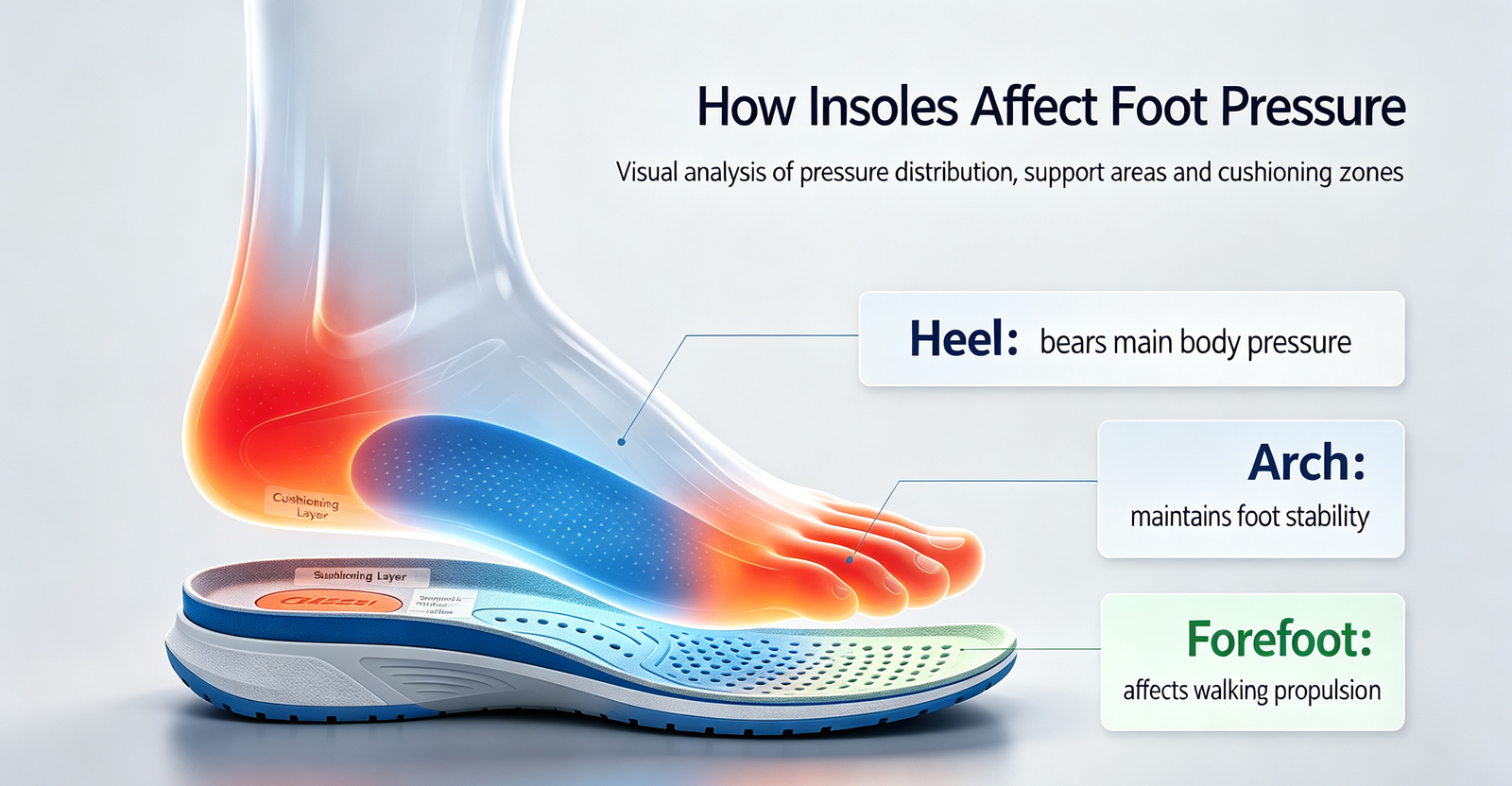
Foot pain often occurs because pressure is unevenly distributed across the foot. This may happen due to flat feet, high arches, overpronation, aging, or spending long hours on hard surfaces.
Properly designed insoles redistribute pressure, stabilize the foot, and reduce stress on muscles, tendons, and joints.
Many users report improvements in conditions such as:
- Plantar fasciitis
- Heel pain
- Arch pain
- Metatarsalgia
- General foot fatigue
- Mild knee discomfort caused by poor alignment
However, insoles are not a cure for every medical condition. Severe structural foot problems should always be evaluated by a healthcare professional.
Who Benefits Most from Insoles?
Insoles are useful for a wide range of people, especially those whose daily activities place additional stress on their feet.
Office Workers
Long periods of standing or walking during the day can lead to foot fatigue and discomfort.
Healthcare Professionals
Nurses and medical staff often spend 8–12 hours on their feet, making supportive insoles a popular solution.
Factory and Warehouse Workers
Hard concrete floors increase pressure on the heel and lower back. Shock-absorbing insoles can improve comfort during long shifts.
Runners
Running generates impact forces several times your body weight. Sports insoles help improve stability and reduce repetitive stress.
Hikers
Uneven terrain requires additional support and cushioning, especially during long-distance hikes.
Older Adults
As natural cushioning under the foot decreases with age, insoles help improve comfort and stability.
Can Insoles Improve Body Alignment?
Surprisingly, your feet influence the entire kinetic chain.
Poor foot alignment may contribute to discomfort in the ankles, knees, hips, and even the lower back.
Supportive insoles can help improve foot positioning, which may reduce unnecessary strain throughout the body.
Although they won’t correct severe orthopedic issues, properly fitted insoles can improve posture and walking mechanics for many individuals.
Do All Insoles Work the Same?
Definitely not.
Different materials provide different levels of support, cushioning, and durability.
Some common insole materials include:
EVA Foam
Lightweight, flexible, and suitable for everyday comfort.
PU Foam
Excellent shock absorption with longer-lasting cushioning.
Memory Foam
Soft and comfortable but may provide less structural support during sports.
Gel Insoles
Good for impact absorption but can be heavier.
Carbon Fiber
Designed for rigidity and energy transfer, commonly used in sports performance and rehabilitation.
Choosing the correct material depends on your intended application rather than simply selecting the softest option.
How Long Does It Take to Feel the Difference?
Many people notice improved comfort immediately.
However, if the insoles significantly change your foot alignment, your body may need a short adjustment period.
Most experts recommend:
- Wear for 2–3 hours on the first day.
- Gradually increase wearing time over one week.
- Replace worn-out insoles every 6–12 months depending on usage.
Choosing the Right Insoles
Before purchasing insoles, consider the following factors:
- Your foot type (flat feet, neutral, or high arches)
- Daily activities
- Type of footwear
- Desired level of cushioning
- Need for arch support
- Foot pain location
- Material preference
There is no single “best” insole for everyone. The most effective insole is the one that matches your specific needs.
Final Thoughts
So, do insoles really help?
For many people, the answer is yes.
When properly selected, quality insoles can improve comfort, reduce fatigue, enhance stability, and support healthier movement patterns. Whether you’re an athlete, a professional standing all day, or someone experiencing occasional foot discomfort, the right insoles can make a noticeable difference.
For footwear brands, retailers, and distributors, choosing a reliable insole manufacturer is equally important. High-quality materials, advanced production capabilities, and customizable designs ensure products that meet diverse market demands and customer expectations


