

Introduction
Foot fatigue has become an important consideration in modern footwear development.
Consumers who spend extended periods on their feet, including workers, athletes, travelers, and everyday users, often look for footwear that provides better comfort and support.
While shoes provide the overall structure, insoles play a critical role in improving foot comfort by helping manage:
- Impact forces
- Pressure distribution
- Foot stability
- Cushioning performance
For footwear brands and professional buyers, understanding how insoles reduce foot fatigue can help create products that better meet customer expectations.
Developing effective comfort insoles requires more than adding soft materials. Manufacturers must consider:
- Foot biomechanics
- Material performance
- Support structure
- Target application
A professional OEM insole manufacturer can help brands transform these requirements into functional footwear solutions.
1. Why Do Feet Become Fatigued?
Foot fatigue usually occurs when the muscles, joints, and soft tissues of the feet experience excessive stress over time.
Common causes include:
- Long periods of standing
- Extended walking
- High-impact activities
- Poor footwear support
- Uneven pressure distribution
When footwear lacks proper support, certain areas of the foot may experience excessive pressure.
Common discomfort areas include:
- Heel
- Arch
- Forefoot
- Ball of the foot
For footwear brands, understanding these problems helps create more effective comfort-focused products.
2. How Insoles Help Reduce Foot Fatigue
2.1 Shock Absorption and Impact Reduction
Every step creates impact forces that travel through the foot and lower body.
A well-designed insole helps absorb these forces through cushioning materials.
Common shock-absorbing materials include:
- EVA foam
- PU foam
- Memory foam
These materials compress during impact and recover afterward, helping improve walking comfort.
Benefits include:
- Reduced impact feeling
- Improved step comfort
- Less pressure concentration
This is especially important for:
- Running footwear
- Work boots
- Outdoor shoes
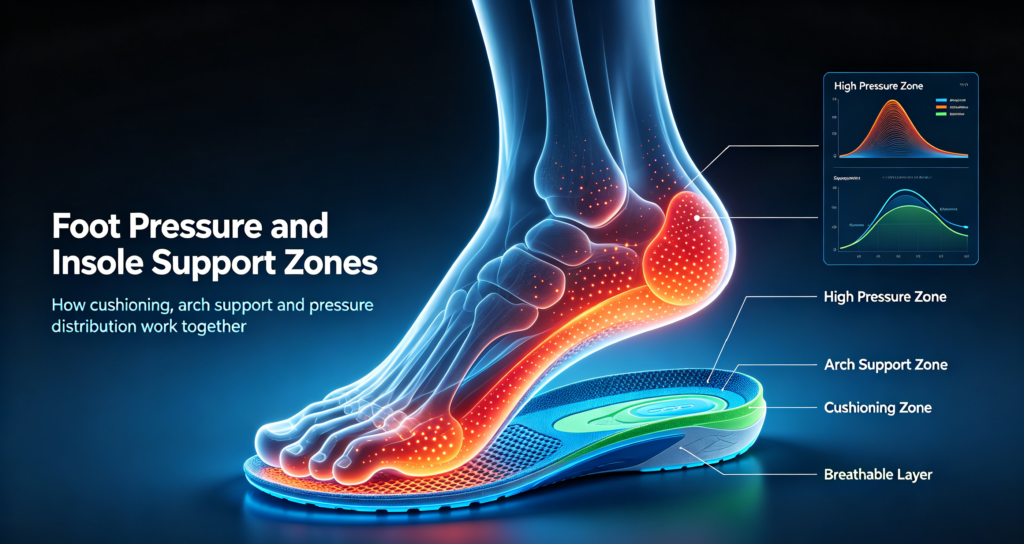
2.2 Pressure Distribution Improvement
Uneven pressure is one of the main reasons people experience foot discomfort.
Functional insoles are designed to distribute pressure more evenly across the foot.
Important design areas include:
- Heel cushioning zone
- Arch support area
- Forefoot support area
Better pressure distribution helps reduce stress on specific areas during movement.
2.3 Providing Arch Support
The foot arch works as a natural shock absorber.
However, insufficient support may lead to:
- Increased foot strain
- Poor alignment
- Faster fatigue
Arch support insoles help maintain better foot positioning by providing additional structural support.
Common support features include:
- Molded arch areas
- Reinforced support structures
- Multi-density foam designs
For brands developing comfort footwear, arch support is one of the most important product features.
2.4 Improving Foot Stability
Foot stability affects how efficiently people move.
When the foot moves excessively inside the shoe, muscles need to work harder to maintain balance.
Supportive insoles may include:
- Heel cups
- Side support structures
- Reinforced materials
These features help improve:
- Foot control
- Stability
- Overall comfort
3. Materials Used to Create Comfortable Insoles
Material selection directly influences comfort, durability, and product positioning.
Professional insole manufacturers often combine different materials to achieve balanced performance.
EVA Foam
EVA is one of the most commonly used materials for comfort insoles.
Advantages:
- Lightweight
- Flexible cushioning
- Shock absorption
- Adjustable hardness
Applications:
- Sports shoes
- Walking footwear
- Everyday comfort insoles
Different EVA densities allow manufacturers to create different comfort levels.
PU Foam
PU foam is known for:
- Excellent resilience
- Long-lasting cushioning
- Premium comfort
Applications:
- Work footwear
- Professional comfort shoes
- High-end insoles
Memory Foam
Memory foam provides:
- Pressure adaptation
- Soft foot feel
- Personalized comfort
Common applications:
- Lifestyle footwear
- Comfort-focused products
4. Insole Design Features That Help Reduce Fatigue
For brands developing comfort footwear, several design elements are especially important.
Heel Cushioning
The heel absorbs significant impact during walking.
Design features include:
- Extra cushioning zones
- Shock absorption inserts
- Soft foam layers
Arch Support
Arch support helps:
- Maintain foot shape
- Improve stability
- Reduce muscle strain
Forefoot Comfort
The front section of the foot experiences pressure during standing and movement.
Manufacturers may add:
- Softer foam layers
- Pressure-relief zones
- Flexible structures
Breathable Top Covers
Comfort is not only about cushioning.
Top fabrics help improve:
- Moisture management
- Skin comfort
- Long-term wearing experience

5. Applications of Fatigue-Reducing Insoles
Comfort insoles are used across multiple industries.
Work Footwear
Workers who stand for long hours need:
- Cushioning
- Support
- Pressure relief
Applications:
- Safety boots
- Industrial footwear
- Service industry shoes
Sports Footwear
Athletes need:
- Impact protection
- Stability
- Energy management
Applications:
- Running shoes
- Training shoes
- Outdoor footwear
Travel and Lifestyle Footwear
Consumers increasingly seek:
- Lightweight comfort
- Long-wearing support
- Better walking experience
Applications:
- Casual shoes
- Walking shoes
- Everyday footwear
6. Manufacturing Considerations for Custom Comfort Insoles
For B2B buyers, developing comfortable insoles requires careful product development.
Material Selection
Manufacturers evaluate:
- Foam density
- Hardness
- Cushioning performance
- Durability
Structural Design
Custom designs may include:
- Arch support
- Heel stabilization
- Multi-layer construction
Testing and Quality Control
Professional inspection includes:
- Thickness consistency
- Shape accuracy
- Material performance
- Bonding strength
Reliable quality control ensures consistent product performance for global markets.

7. Why Choose S-King for Custom Comfort Insoles?
S-King specializes in customized insole manufacturing for footwear brands, distributors, and OEM customers worldwide.
S-King helps brands develop comfort solutions for:
- Work footwear
- Sports footwear
- Casual shoes
- Orthotic products
Customized Product Development
S-King supports:
- Material recommendations
- Structural design
- Prototype development
- Custom molds
- Private label production
Flexible Material Solutions
Available materials include:
- EVA foam
- PU foam
- Memory foam
- Carbon fiber
- TPU support components
These options allow brands to create products with different comfort and performance levels.
OEM & ODM Manufacturing Support
S-King provides:
- Product customization
- Mass production
- Quality inspection
- Packaging solutions
For companies searching for a reliable comfort insole supplier, S-King provides complete OEM and ODM manufacturing support.
Conclusion
Insoles play an important role in reducing foot fatigue by improving cushioning, pressure distribution, and foot stability.
For footwear brands and OEM buyers, creating successful comfort insoles requires the right combination of ergonomic design, material selection, and manufacturing expertise.
With customized development capabilities and professional production experience, S-King helps global companies create high-quality insoles designed for comfort, support, and long-term customer satisfaction.


