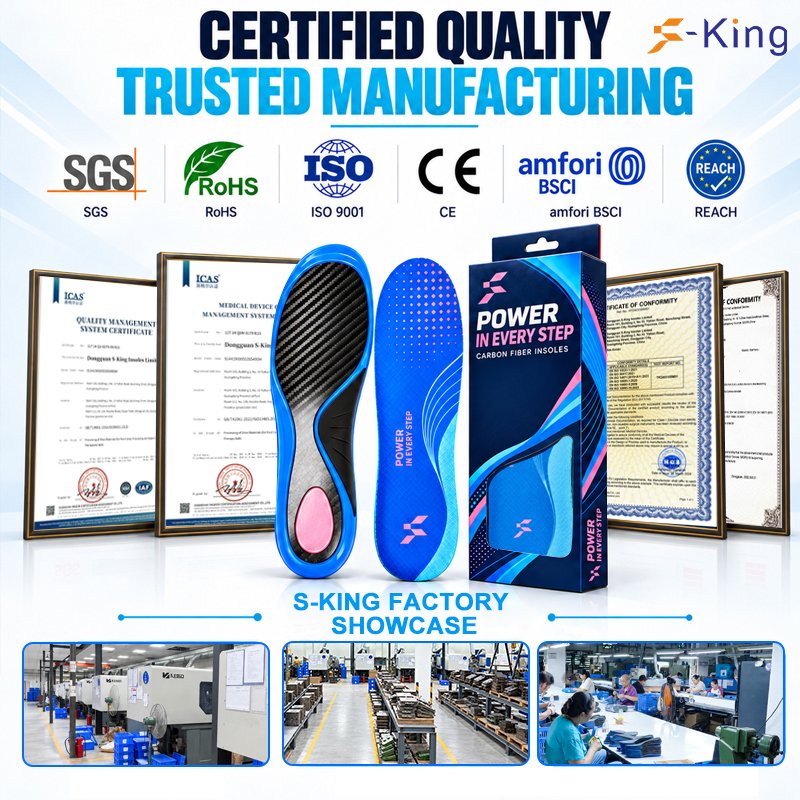
We hold safety data sheets for every adhesive, primer and coating used on our line, and we issue REACH declarations material by material. Those two sentences are the short version of this page: what documentation we hand over, what each piece proves, and what it removes from the compliance file you are already building.
One thing is worth clearing up first, because it is the most common mismatch in sourcing emails. The SDS you should ask us for is not for the insole. Under REACH Article 31, safety data sheets are supplied for substances and mixtures. A finished insole is an article. A factory that answers “here is the SDS of this insole” is usually forwarding a document that covers something else, and hoping nobody opens it.
The Documents We Supply
Four document types cover an insole order. They answer different questions and none replaces another:
| Document | What it covers | What it proves |
|---|---|---|
| Safety data sheet (SDS), 16 sections per REACH Annex II | The adhesives, primers, PU coatings and finishing agents used in production | Every chemical entering the plant is identified, classified and handled to a defined protocol — and that we know which one goes into your construction |
| REACH SVHC declaration | Material by material, against the current candidate list | Whether anything above 0.1% w/w is present in the part you receive, stated per component rather than per shipment |
| REACH Annex XVII conformity statement | Azo dyes, chromium VI, phthalates, PAHs, nickel release | The materials meet the restrictions that stop goods at customs or at marketplace review |
| CE declaration of conformity | The product, against the regulation that applies to it | The product obligation, which sits on the item rather than on the factory |
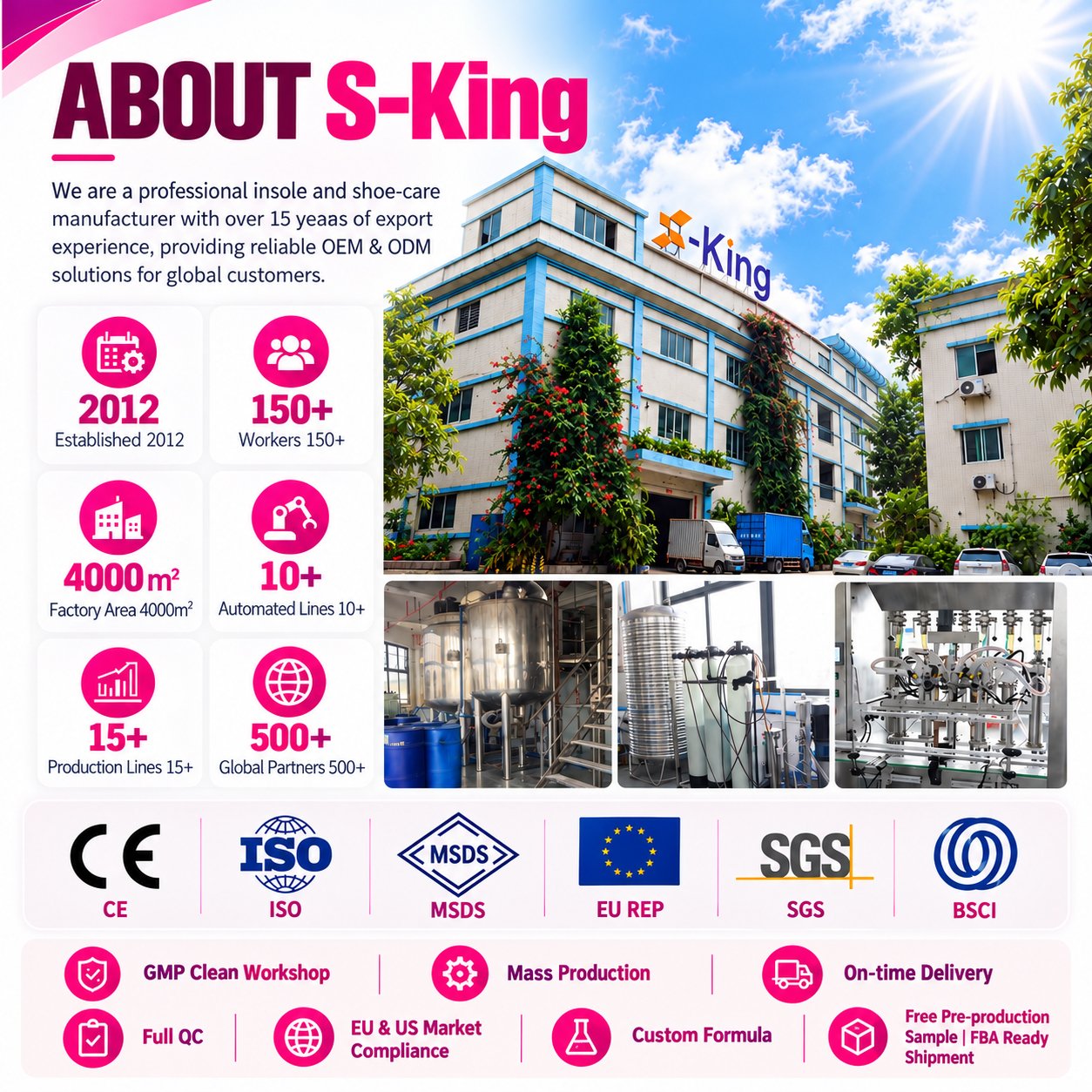
Our ISO 9001, ISO 13485, ISO 14001 and ISO 45001 certification, amfori BSCI certification and SGS on-site verification sit alongside these. Scopes and certificate numbers are published on our certificates and compliance page.
Why the SDS Is Not for the Insole
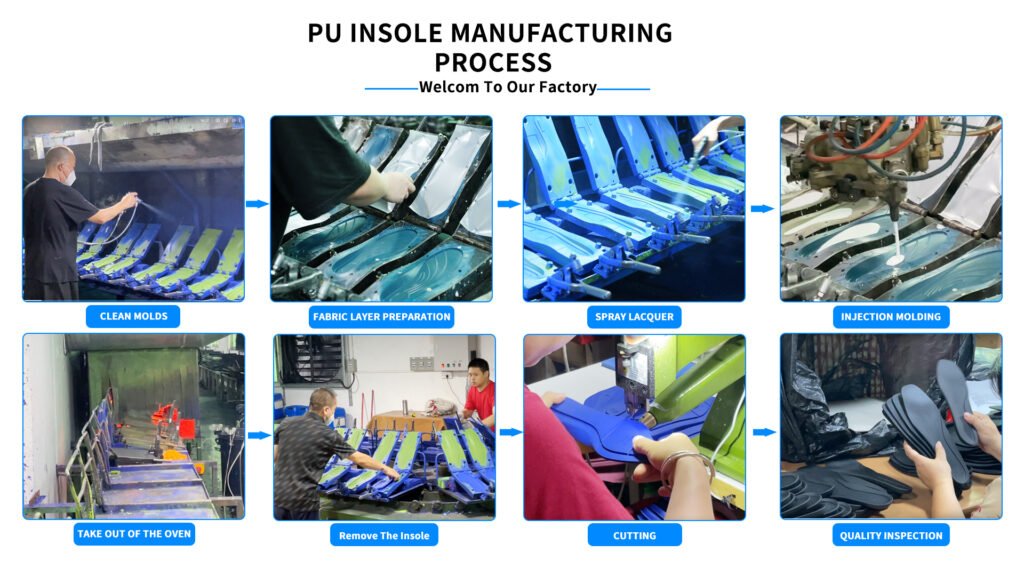
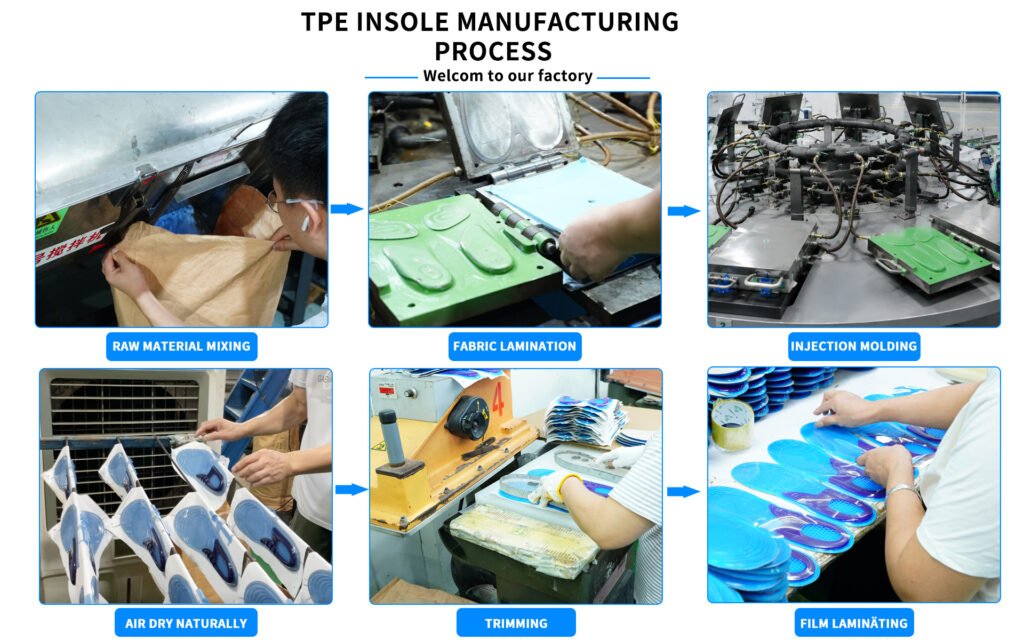
An SDS exists to protect the people handling a chemical and the people storing it. That is why the obligation attaches to substances and mixtures, and why it ends at the point where material becomes a product. The chemistry that matters in an insole — the adhesive bonding topcover to core, the primer under a PU layer, an antimicrobial finish — sits one step upstream. That is where the sheets live, and that is where a buyer should ask for them.
Two questions get you further than a document request list:
- Which adhesive and grade goes into our construction? A factory that can name it is working from a controlled bill of materials.
- Can we see the SDS for that adhesive, plus an SVHC and Annex XVII statement for each material in the BOM? A supplier who replies with one generic PDF for “all our insoles” is telling you the documentation is decoration.
Declaration, Test Report, SDS: Not the Same Thing
| Who produces it | What it is worth | |
|---|---|---|
| SDS | The chemical supplier, to a fixed 16-section format | Hazard and handling information. It is about the drum, not the product. |
| Declaration | The manufacturer, on request | A statement of composition, traceable to the BOM. Fast, and it covers every material. |
| Test report | An accredited laboratory, on a sample | Evidence about that sample on that date. Strongest, but material coverage is always partial. |
Most compliance files fail because these three get swapped in conversation, not because a material is wrong.
What Each Document Removes From Your File
- Importer due diligence. If you place the goods on the EU market, you carry the obligation to know what is in them above 0.1% w/w. Our material-level declaration is that input, without you chasing sub-suppliers three tiers down.
- Retailer and marketplace onboarding. Reviews stall on missing papers far more often than on failed results. A version-dated declaration set clears the first pass.
- Customs and market surveillance. The Annex XVII statement covers the restrictions most likely to trigger a hold on footwear components.
- Claims defense. If a restricted-substance question arrives eighteen months later, you hold dated documents instead of an email promising compliance.
Where Compliance Files Stall
Three failures repeat across insole programs, and none of them is about the chemistry itself.
- Thresholds counted on total weight. The 0.1% limit applies per component, not to the finished pair. A printed logo layer weighing two grams can trigger it alone, while the same substance looks invisible spread across a 180-gram insole.
- Declarations with no date and no material. The candidate list grows — it stood at 253 entries after the February 2026 update — so an undated declaration describes a list that no longer exists.
- Recycled content that moves between batches. Post-industrial foam and recycled EVA are exactly where composition drifts, which is why batch-level statements matter most there. Our guide to sustainable insole materials covers that trade-off.
Manufacturer Insight
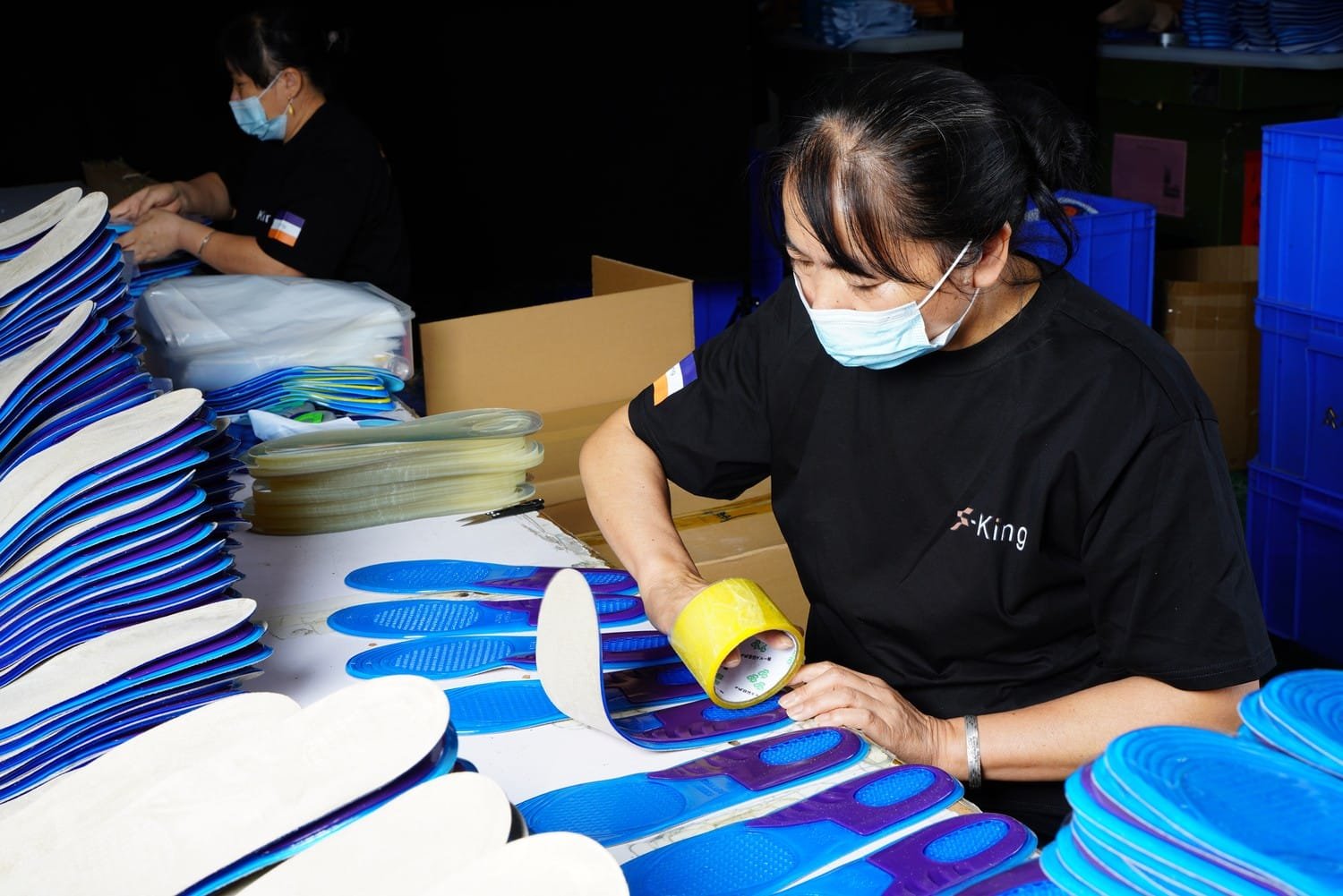
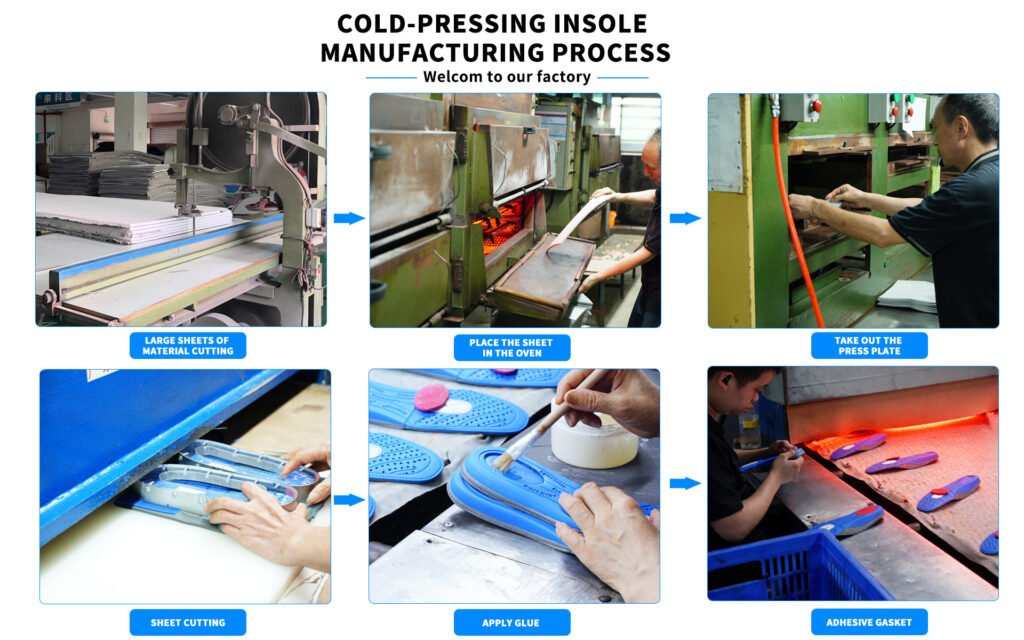
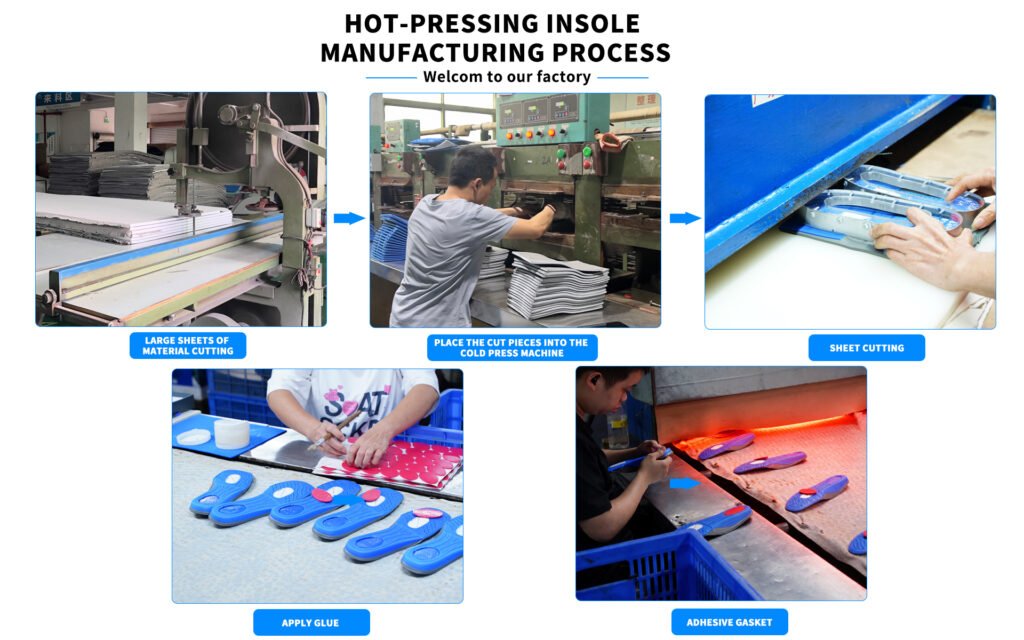
From the factory side, document control is housekeeping before it is legal work. Our safety data sheets are kept beside the line, not in an office folder, because the person who needs to know what is in a drum is the operator opening it. When an adhesive supplier reformulates, the sheet is re-requested that week. An outdated SDS on the floor is worse than none, because it is confidently wrong.
Two honest notes for buyers. First, the restricted substances that actually hit insole programs rarely come from the foaming line: azo dyes arrive with fabric dyeing, chromium VI with leather tanning, PAHs with black rubber. The declaration you need most is therefore the one from our fabric and leather suppliers, and we pass those through rather than restating them as our own.
Second, not every material we ship carries a third-party lab report; some documents are supplier declarations. Ask which is which and we will tell you, because a declaration is a statement of composition while a test report is evidence about a sample. Blurring the two is how a file that looked complete gets rejected at review. Where a buyer needs lab evidence on a specific material, put it in the RFQ and let us quote the test rather than discover the gap later — the same logic applies to what belongs in an insole manufacturer RFQ.
Frequently Asked Questions
Can you send the SDS for our finished insole?
There is no SDS for a finished insole, because REACH Article 31 applies to substances and mixtures, and an insole is an article. What we send is the SDS for the adhesive, primer and coating used in your construction, together with an SVHC and Annex XVII statement covering each material in the bill of materials.
Do you provide REACH SVHC declarations?
Yes, material by material rather than as one blanket statement for the catalog. The 0.1% threshold applies per component, so a single document covering every product would not be usable in an importer’s due diligence file. Tell us the materials in your order and we issue against those.
Is a declaration as good as a test report?
They do different jobs. A declaration states composition and traces back to the bill of materials; a test report gives laboratory evidence about a specific sample on a specific date. Most buyers need declarations for coverage and reports for high-risk materials, and we tell you which of the two each document is.
Which documents do EU customs and marketplaces ask for?
Typically a CE declaration of conformity, a REACH Annex XVII statement and an SVHC declaration, sometimes with a test report on the material in contact with skin. Requirements vary by destination and by channel, so send us the market and the marketplace and we will confirm the exact set before the order rather than after.
Does any of this say something about insole quality?
No. Chemical compliance is a separate file from durability, hardness, compression set and dimensional accuracy. Those are covered under our quality system and the certification list on our compliance page.
The Short Version
- We hold SDS for the chemicals, not the product. Under REACH, a finished insole is an article and needs no safety data sheet.
- We issue REACH declarations per material. The 0.1% SVHC threshold is counted per component, so one blanket statement is worthless.
- Named in the RFQ beats requested afterwards. Ask for the adhesive grade, the BOM-level declarations, and which materials carry lab reports.
Scopes and certificate numbers for CE, ISO 9001, ISO 13485, ISO 14001, ISO 45001, amfori BSCI and our SGS on-site verification are on the certificates and compliance page, the wider document set is described in which certifications to ask an insole supplier for, and the manufacturing side is on our production line page. Send your market, materials and volume through the OEM/ODM page or contact us, and the documentation comes back with the quotation.