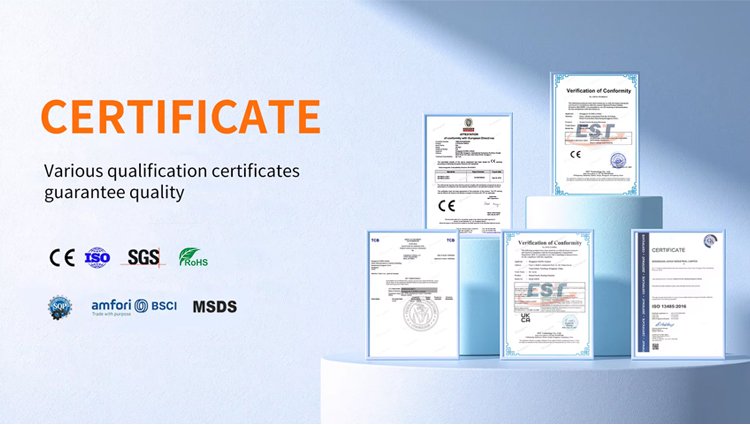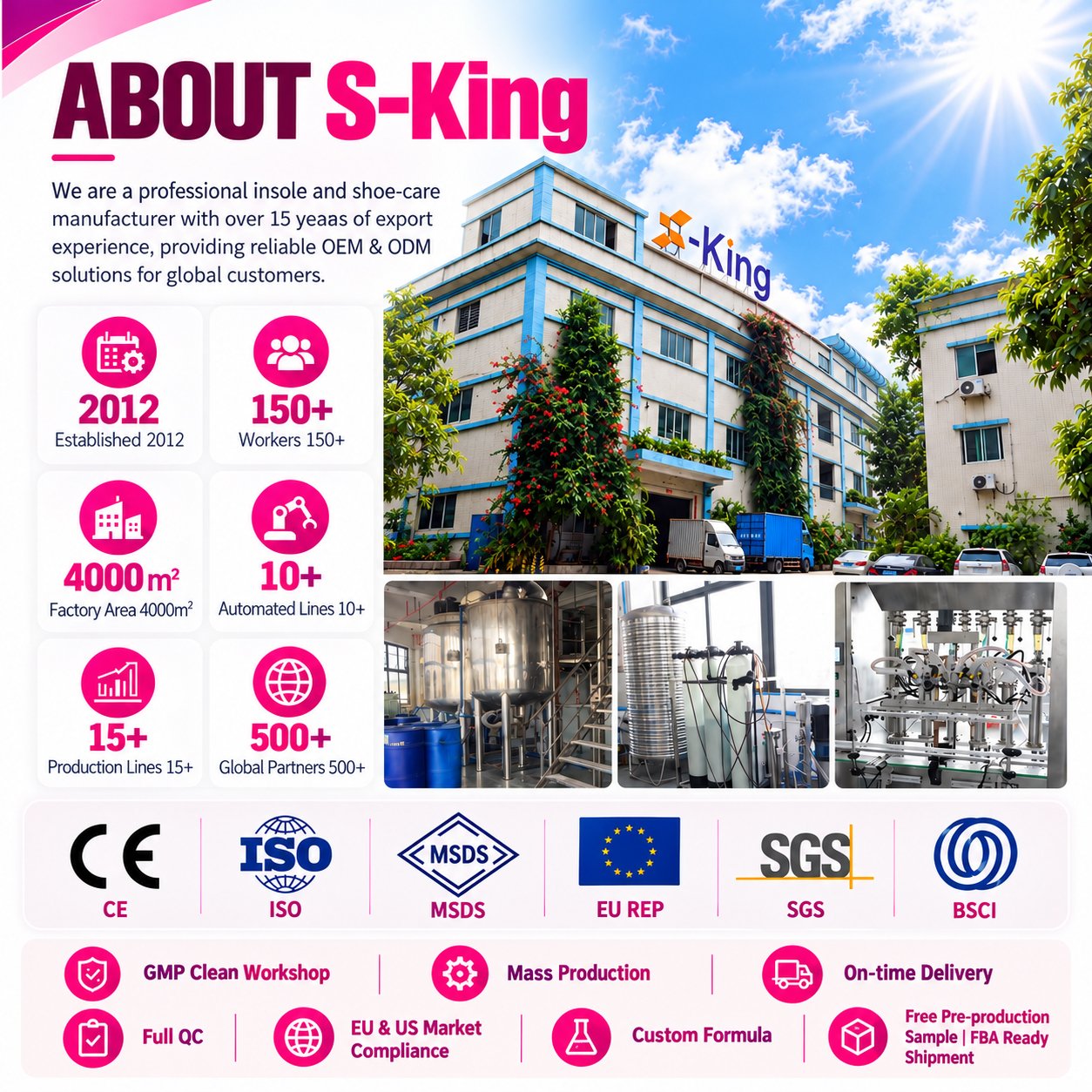
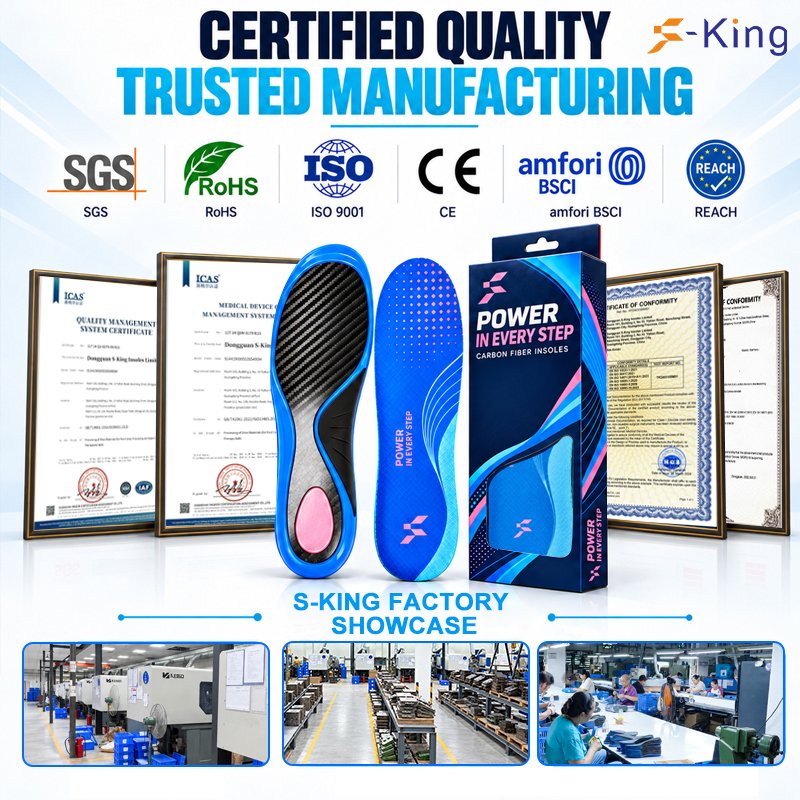
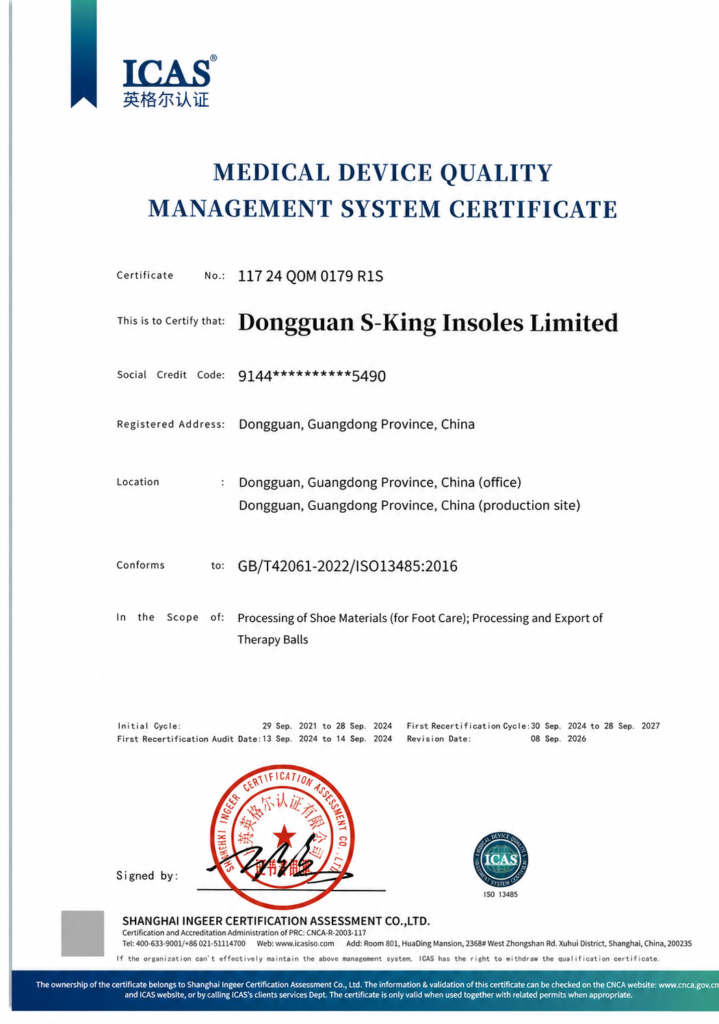
We are certified to ISO 13485. The scope on our certificate is a quality management system for medical device manufacturing, applied to orthotic and medical insole production. If you are running a medical, orthotic or diabetic line, that scope line is the one that matters: the products are built under a system audited against medical device requirements, not a general manufacturing one.
One boundary is worth stating before anything else, because it is where suppliers most often overreach. ISO 13485 does not approve a device. Certification covers the system that builds it. Placing a medical device on the EU or US market runs through separate regulatory routes — CE marking under the EU MDR, FDA clearance or approval in the United States. A certificate presented as a substitute for either is being oversold.
What the Certified Scope Requires
ISO 13485 is written for regulatory purposes, which makes it heavier on documentation than ISO 9001. These are the requirement areas that most affect an insole program:
| Requirement area | What the standard asks | What it produces for your file |
|---|---|---|
| Risk management | Risk identified and managed across the product life cycle | Risk documentation tied to each design and change |
| Design and development control | Inputs, outputs, verification, validation, and controlled design transfer | Design history records and validated specifications |
| Documented information | Controlled versions, retained records, protection against unintended change | Dated, traceable production records |
| Traceability | Identification maintained through production and delivery | Batch and lot records linking pairs to material lots |
| Complaint handling and advisory notices | Complaints investigated, with a defined route for field action | Complaint investigation records |
| Corrective and preventive action | Cause addressed, action taken, effectiveness verified | CAPA reports with verification results |
ISO 9001 or ISO 13485: Which Covers Your Order
| ISO 9001 | ISO 13485 | |
|---|---|---|
| Purpose | General quality management system | Quality management system for regulatory purposes |
| Structure | Annex SL high-level structure, clauses 4 to 10 | Independent structure, deliberately not aligned to Annex SL |
| Documentation | Documented information proportionate to the organization | Heavier requirements on documents and retained records |
| Emphasis | Customer satisfaction and continual improvement | Regulatory compliance, risk management, traceability |
| Relevant to | Comfort, cushioning, sports and work programs | Orthotic, medical and diabetic programs |
ISO 13485 was derived from ISO 9001 but has since become an independent standard — the two share an intellectual heritage, not clause numbering or structure. Neither certificate implies the other, which is why both are listed.
What This Removes From a Medical Program
- The quality system part of supplier qualification. Recurring third-party audits against a medical device standard, rather than a self-assessment or a questionnaire.
- Gaps in the technical file. Design verification and validation records, process validation and retained production records are produced by the system instead of assembled when someone asks.
- Traceability gaps. Identification is maintained through production, so a lot can be traced back to the material lots used.
- Round trips during submission. We supply material data and production records to support your own regulatory submissions.
The Limits, Stated Plainly
- Certification is not device approval. CE marking under the EU MDR and FDA clearance in the US are separate obligations that follow the device, not the factory.
- Whether an insole is regulated depends on its intended purpose and the market. That determination belongs to whoever places the product on the market. We supply the manufacturing records; we do not classify the product for you.
- Scope is literal. Our ISO 13485 scope covers orthotic and medical insole production. A comfort program is not produced under it, and we will not imply that it is.
Manufacturer Insight
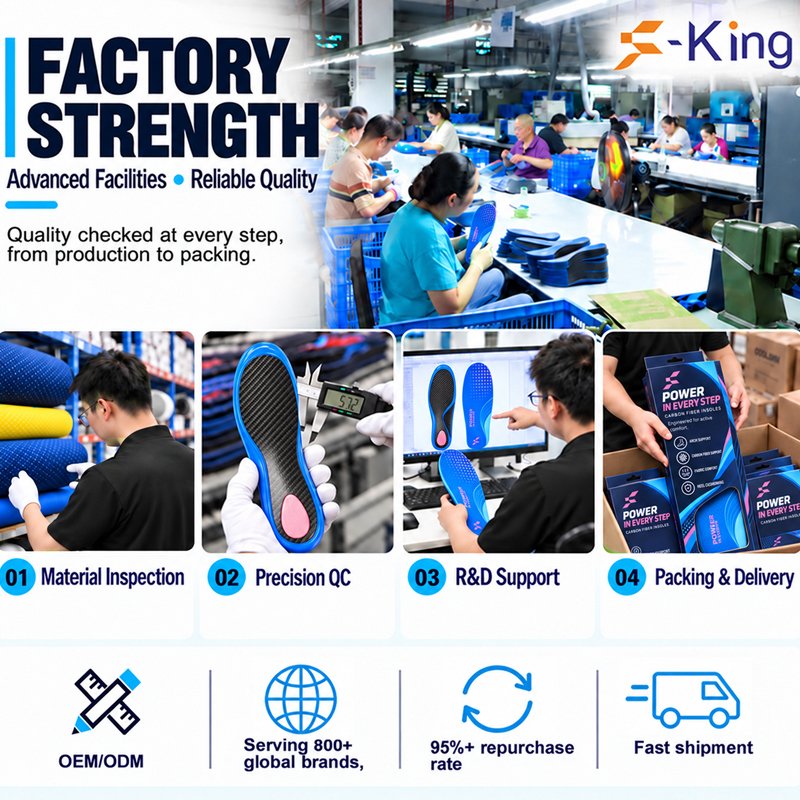
From the factory side, working under a medical device quality system changes three things on the floor. Processes that are normally inspected after the fact get validated before production — lamination, molding and bonding parameters are set, recorded and re-verified rather than judged by eye. Change control becomes real: swapping a foam supplier or a topcover finish stops being a purchasing decision and becomes a documented review, because the material is part of what was validated. And records are retained rather than summarized, so a batch built last year can be reconstructed from what was written down at the time.
The honest trade-off is that it costs more in documentation time, and that cost is only worth paying where the program needs it. For orthotic, medical and diabetic lines, it is the difference between a supplier who can support a submission and one who cannot. For a comfort or sports program, ISO 9001 is the certificate that matters — and we say so rather than selling you the heavier one.
Frequently Asked Questions
Is S-King ISO 13485 certified?
Yes. Our certificate is issued by an accredited certification body, and the scope is a quality management system for medical device manufacturing, applied to orthotic and medical insole production. Current copies are sent with the quotation.
Does ISO 13485 mean the insoles are CE marked or FDA approved?
No. ISO 13485 certifies the quality management system, not the device. CE marking under the EU MDR and FDA clearance or approval in the US are separate obligations that depend on the product, its intended purpose and the destination market.
Which products are produced under your ISO 13485 system?
Our orthotic and medical insoles, in line with the certificate scope. Comfort, sports and work programs are manufactured under the ISO 9001 system. Tell us the program and we will state which system each line runs under.
Is ISO 13485 recognized in the United States?
It is the structural basis for FDA’s Quality Management System Regulation, which took effect on February 2, 2026 and incorporates ISO 13485:2016 by reference. Certification alone, however, is not FDA approval of any device.
Can you support our technical documentation?
Yes. We supply material data and production records to support your own regulatory submissions. Send the list of documents your file needs and we will return what we can provide with the quote, and say plainly what we cannot.
The Short Version
- We are certified to ISO 13485 for medical device manufacturing, applied to orthotic and medical insole production.
- It proves the system, not the device — CE marking and FDA clearance are separate obligations that follow the product.
- It removes four things from a medical program: system audits, technical file gaps, traceability gaps, and submission round trips.
Scopes and certificate numbers are published on our certificates and compliance page, and the orthotic and medical lines built under this system are listed under medical insoles and orthotic insoles. For the wider document set buyers usually request, see which certifications to ask an insole supplier for. Send your market, materials and volume through the OEM/ODM page or contact us, and the documents come back with the quotation.