Running shoes are usually replaced on one signal: the outsole. That signal comes late. The insole — the layer your foot actually sits on — typically loses its useful properties well before the outsole shows visible wear, and it does so with no outward sign. There is no wear indicator on a foam surface that has quietly stopped returning energy.
The mistake we see most often is not ignoring the insole. It is replacing it with something that fights the shoe. A runner adds a thicker, softer insole to solve fatigue, then finds the shoe feels less stable and the heel now sits higher than the shoe was built for. When to replace matters far less than what you replace it with.
Signs It’s Time to Replace Your Running Shoe Insoles
Not sure whether your insoles need replacing? A worn insole rarely looks worn. These are the signals to read instead.
Reduced cushioning. If the shoe feels harder underfoot than it did three months ago, the foam has taken a compression set — it has been deformed by repeated loading and no longer springs back to its original thickness. This is a material change, not a perception one.
Increased foot fatigue. Your feet tire earlier in a run even though training volume has not changed. The insole is no longer distributing load, so the soft tissue takes more of it.
Pressure at the heel or arch. A compressed insole supports less, which concentrates pressure over a smaller contact area.
Uneven wear. Visible flattening, cracking, or a polished shine on the top cover. A shiny patch is usually where the surface has compacted and lost texture.
Shoes still look fine. Many runners replace footwear only when the outsole wears through. The insole can pass its useful life long before that point.
What Actually Wears Out Inside a Running Insole
Running generates thousands of loading cycles per session, and each one compresses the insole. Four things fail, in a fairly predictable order.
Cushioning foam. Foam loses height under repeated compression — the technical term is compression set, and it is the single most useful number to ask a supplier for. It is measured as the percentage of original thickness the foam has permanently lost after a defined compression period, and it is tested under a recognised method such as ASTM D395. A lower figure means the foam holds its thickness longer under the same load. Once the cells have collapsed, the material cannot recover, and every later step has less material working for it.
The top cover. Abrasion from socks plus moisture from sweat degrades the fabric. This shows up as shine, pilling, or delamination from the foam beneath.
The arch support shell. Rigid components do not compress, but they fatigue. Repeated flexing can reduce the shell’s ability to hold shape, which is why a supportive insole can gradually stop feeling supportive.
Adhesive bonds. Multi-layer insoles are bonded. Heat, moisture, and flexing work on those bonds, and separation between layers is common in older insoles.
For anyone specifying insoles rather than buying them, this is the useful frame: the replacement question is really a materials question. Two insoles at the same thickness can have service lives that differ by a factor of two, depending on foam density and construction.
How Often Should Running Shoe Insoles Be Replaced?
The honest answer is that it depends on mileage, frequency, body weight, running surface, and the materials used. As a working guideline:
Casual runners typically replace insoles every 6–12 months. Regular runners often notice the difference somewhere between 300 and 500 miles. Marathon and trail runners tend to hit it sooner, because higher impact and more varied terrain accelerate compression.
Material changes the window as much as mileage does:
| Material | Typical replacement window (regular runners) | What fails first |
|---|---|---|
| Low-density EVA | ~200–300 miles | Compression set in the forefoot and heel |
| Mid / high-density EVA | ~400–600 miles | Gradual loss of thickness; top-cover wear |
| PU (polyurethane) | ~600–900 miles | Slow compression; usually outlasts the top cover |
| Gel inserts | Varies widely | Gel migration and cover delamination |
| Carbon composite plate | Structural life is long | Plate is durable; the surrounding foam is not |
These are general material behaviour ranges, not a guarantee for a specific product. Density and construction decide the real number, which is why the guideline is always a starting point rather than a schedule.
Can New Insoles Improve Running Performance?
Replacement insoles will not make you faster. What they can do is remove the small, accumulating penalties of a worn one.
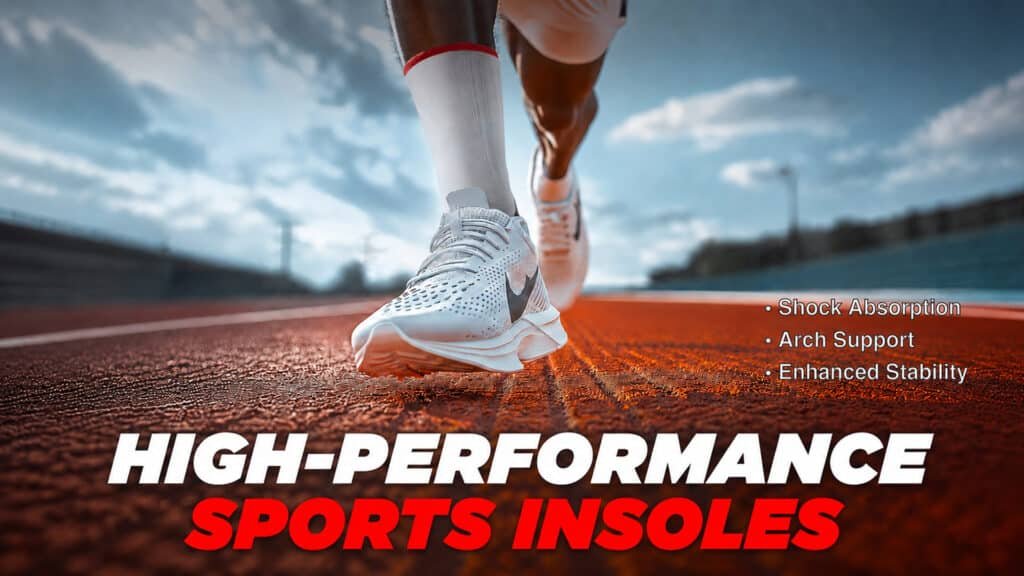
Quality running insoles help by providing consistent arch support, distributing pressure away from the heel and forefoot, maintaining shock absorption across the full run, and holding a consistent feel from the first mile to the last. For runners training regularly, consistency of support matters as much as raw cushioning — an insole that feels good at mile 1 and flat by mile 10 is a net negative.
Are Aftermarket Insoles Better Than Factory Insoles?
Not automatically. They are designed differently. Many factory insoles are built to fit a wide range of users at the lowest possible weight and cost, and they prioritise staying out of the way. Aftermarket insoles are usually engineered toward a specific goal — more cushioning, more arch support, more stability.
That can mean higher-density foam for durability, an anatomical arch profile, a deeper heel cup for stability, better moisture management, and more controlled shock absorption. Whether that is better depends on your running style, foot shape, and training load — and on whether the insole fits the shoe’s internal volume, which is discussed below.
Choosing the Right Replacement Running Insoles
Not every runner needs the same insole, and the most common selection error is choosing softness instead of suitability.
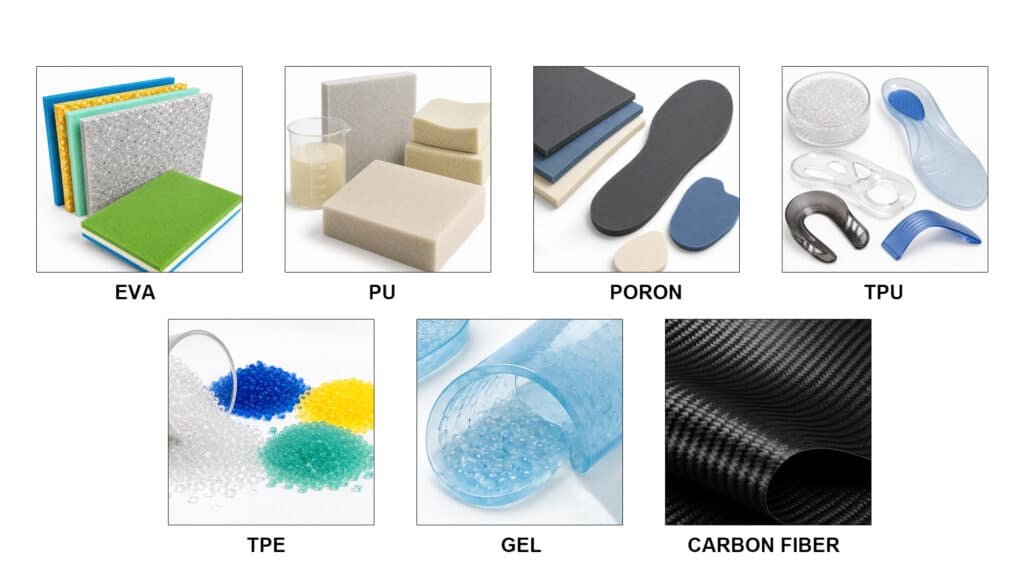
Material is the first decision, because it sets durability and behaviour:
| Material | Character | Suits | Trade-off |
|---|---|---|---|
| EVA | Light, tunable across a wide density range | Most running applications | Lower-density versions compress quickly |
| PU | Denser, holds shape longer | High-mileage and durability-led programs | Heavier than EVA |
| Gel | Localised pressure relief | Targeted cushioning inserts | Can migrate; heavier |
| Carbon composite | Stiff, controlled flex | Stability and energy-transfer goals | Expensive; needs the right shoe to work |
Then match to your situation:
Your foot type. Flat feet, neutral arches, and high arches each need a different support profile.
Running distance. Long-distance runners usually want more cushioning; shorter-distance runners often prefer more ground feel and responsiveness.
Running surface. Road, trail, and treadmill place different demands on the insole.
Shoe fit. A replacement insole has to sit inside the shoe without pushing the foot up out of the heel cup or tightening the forefoot.
Internal volume. This is the variable most runners never consider and the one that causes the most disappointment. A shoe built around a thin insole has limited vertical room. Add a thick insole and the foot sits higher than the shoe was designed for, which changes heel retention and stability. Fit is not just length and width — it is height too.
Can Replacing Insoles Extend the Life of Running Shoes?
Sometimes, and within limits. If the outsole and midsole are still in good condition, a new insole can restore most of the original underfoot comfort. If the midsole foam has already lost its cushioning, or the outsole is significantly worn, replacing the shoe is the better decision. Replacement insoles are maintenance, not a repair.
The general principle — that an insole is often the most efficient way to upgrade footwear that is otherwise sound — applies well beyond running. It is covered in more depth in our article on why the insole can be an efficient way to upgrade existing footwear.
Manufacturer Insight
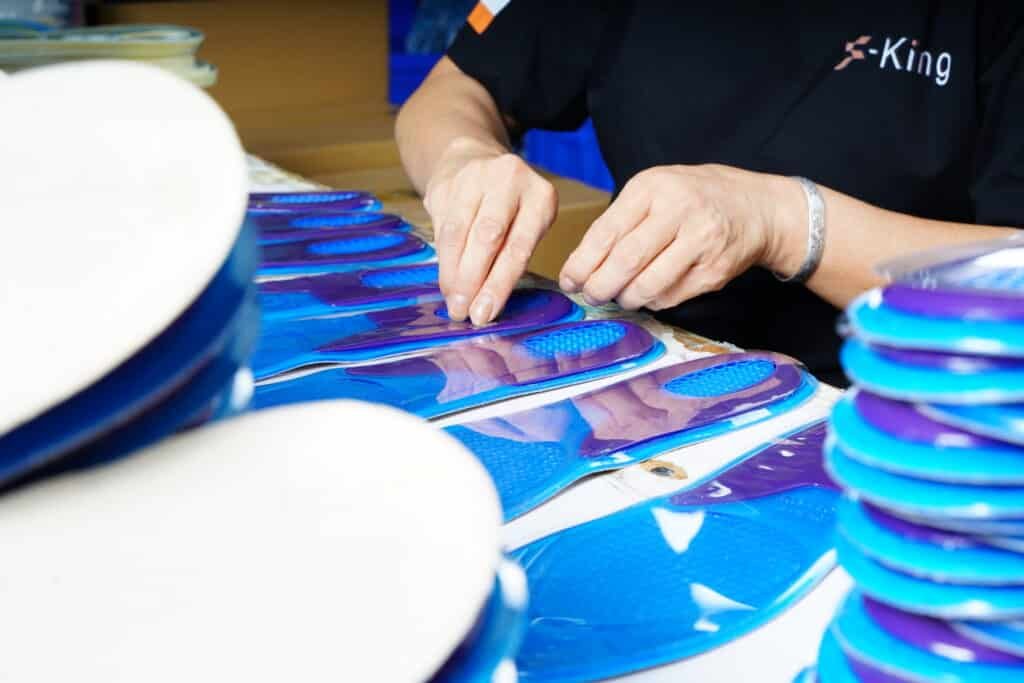
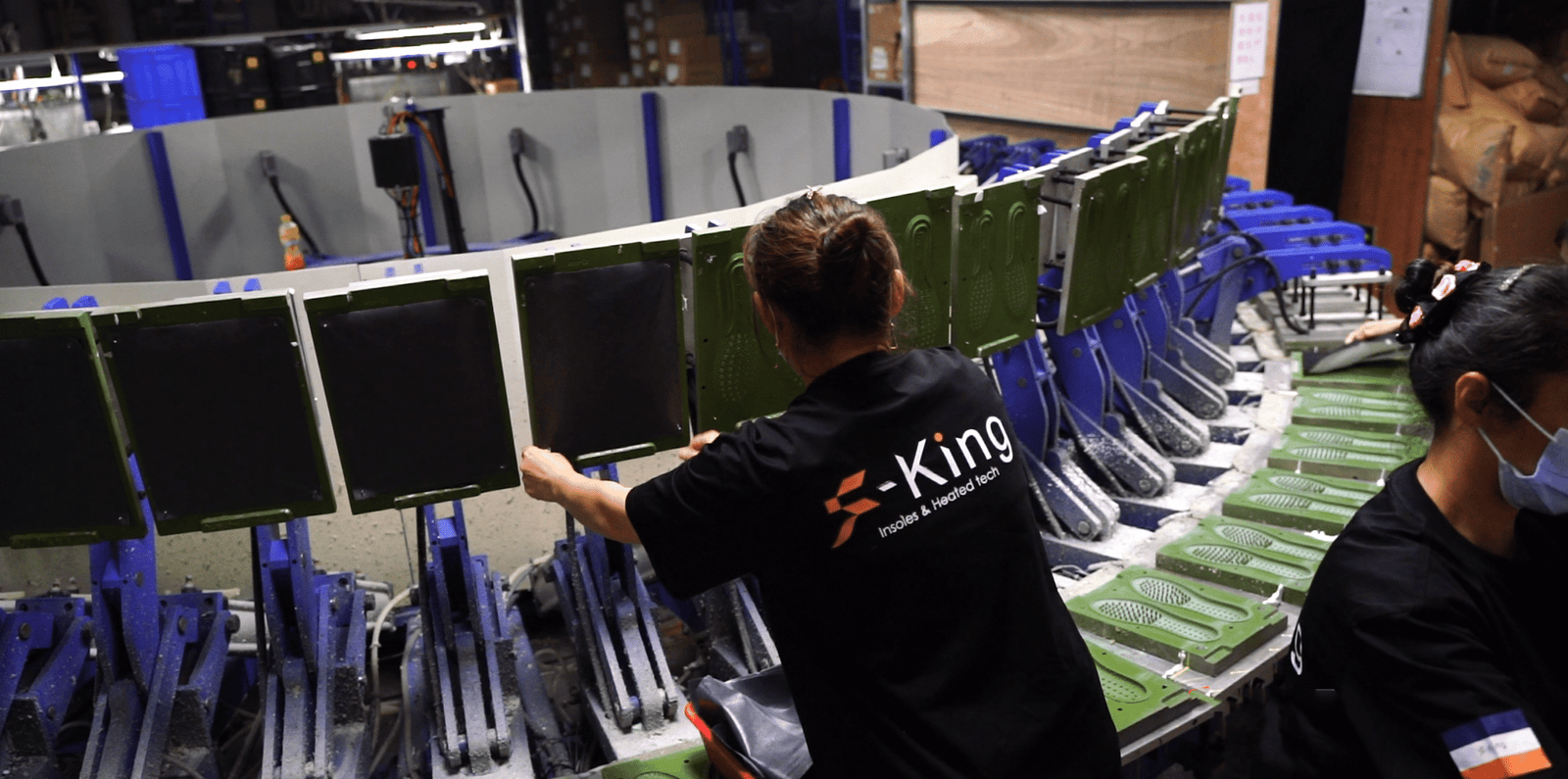
From the manufacturing side, worn insoles come back to us in a fairly consistent pattern. The foam has flattened in the heel and first metatarsal area, the top cover has worn through over the forefoot, and the bond between layers has started to release at the toe. In most cases the insole did not fail because the runner abused it. It failed because the material was never specified for the loading it would see.
Three things we would ask any brand to settle before an insole goes into production:
What is the intended mileage per pair? This is the single input that decides foam density, and it is usually missing from a brief. A specification written for 200-mile use and one written for 600-mile use should not use the same foam.
What is the shoe’s internal volume? We have seen insole programs fail at retail for no reason other than thickness. The insole met the spec and the shoe met the spec, but combined, the foot no longer sat in the heel cup.
What has to hold up longest — the foam or the bond? Multi-layer constructions trade these against each other. Deciding which one leads the design prevents the most common long-term complaint.
On our own running programs, compression set is the number we test against first, because it predicts field life better than any other single property. Foam density and construction are specified from the intended mileage, not chosen from a catalogue and adjusted afterwards. That is usually the difference between an insole that feels the same at 400 miles and one that has already gone flat.
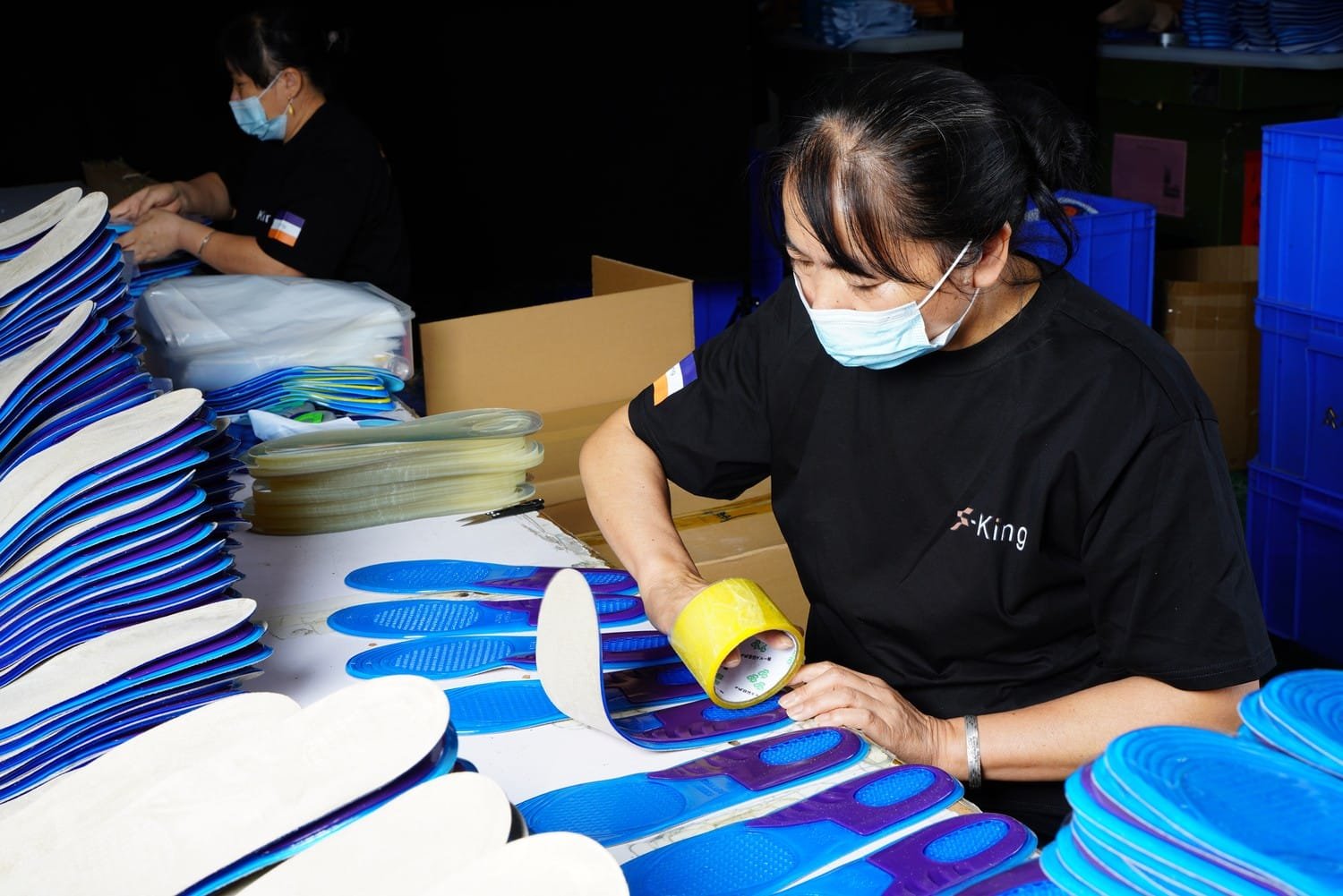
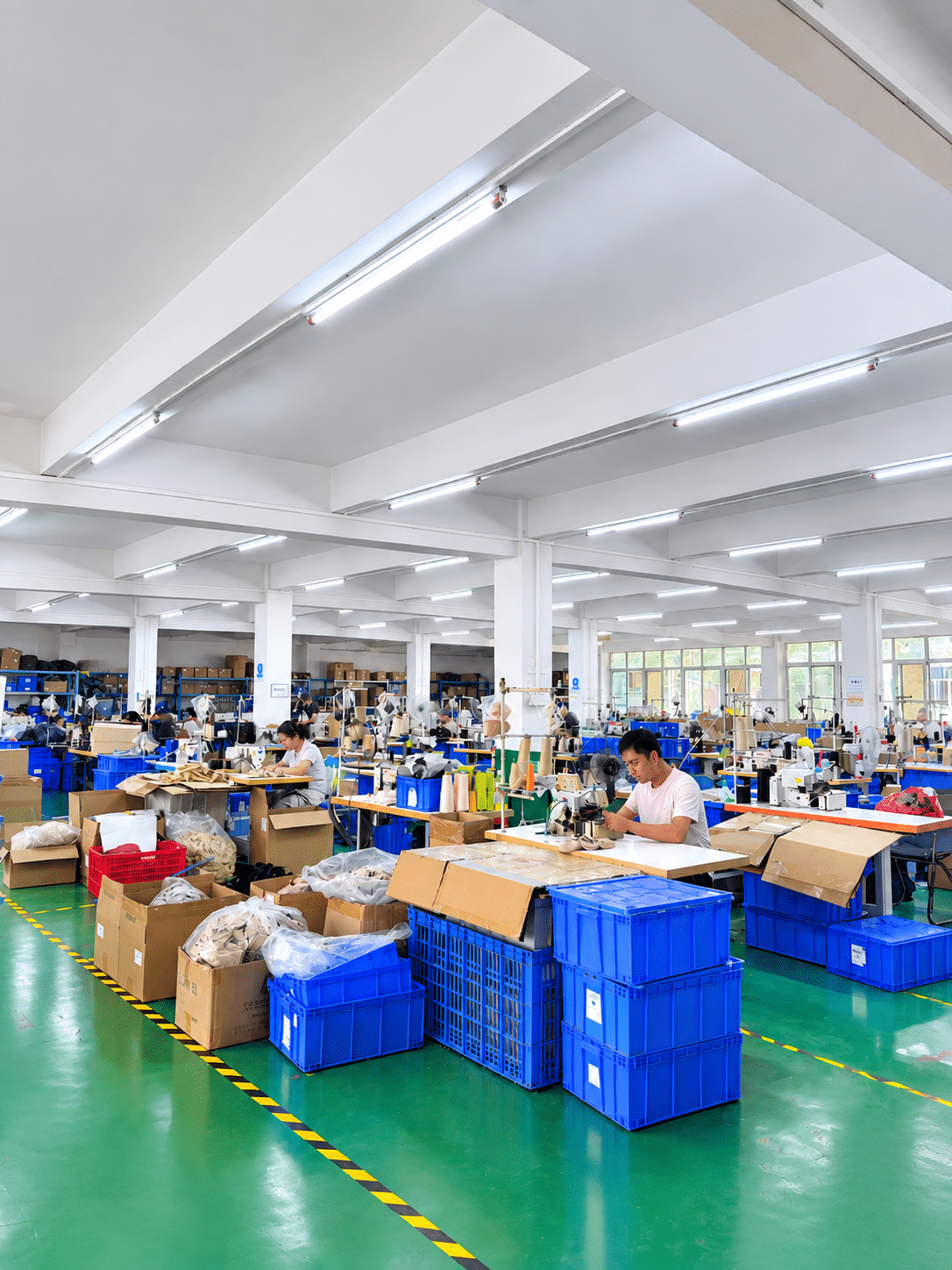
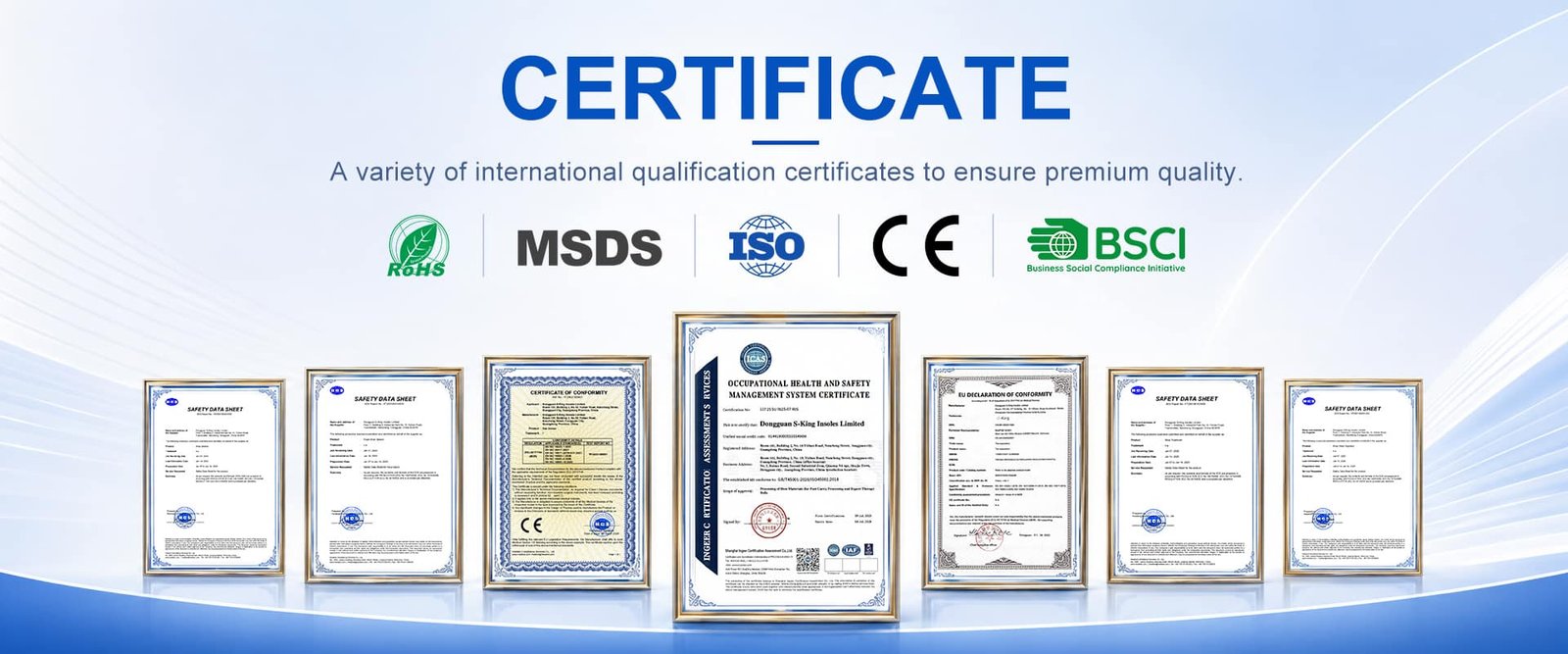
S-King has been manufacturing insoles since 2012, producing over 3 million pairs annually from an MOQ of 100 pairs. We handle material selection, mold development, and private label construction in-house, and the factory is CE-certified, BSCI-audited, with ISO 45001 and SDS documentation. If you are developing a running insole program, the material conversation is the one worth having first — you can see how we approach it on our OEM/ODM page.
Common Mistakes to Avoid
Waiting until discomfort shows up. Worn insoles rarely announce themselves. Replace on mileage and condition, not on symptoms.
Assuming all insoles perform the same. A thin factory insole and a density-tuned running insole are different products.
Choosing by softness. Softness is not cushioning performance. A very soft foam can compress faster and end up less comfortable at mile 10 than a firmer, higher-density one.
Ignoring fit after replacement. The insole has to fit the shoe, not just the foot.
Running compressed factory insoles too long. They were designed to a cost and weight target, not a mileage target.
Frequently Asked Questions
How do I know if my running shoe insoles are worn out?
Look for a compression set in the heel and forefoot — press the insole and see whether it returns to its original thickness. Other signs are a shiny, compacted top cover, visible flattening of the arch area, or layer separation. Mileage is a more reliable signal than appearance.
Can I put new insoles in old running shoes?
Yes, provided the midsole foam still has cushioning and the outsole is not significantly worn. The insole restores the contact layer, but it cannot restore the midsole. If the midsole is already compressed, a new insole will feel better briefly and then fade.
Do more expensive insoles last longer?
Price is a weak predictor. Service life follows foam density and construction quality. A well-specified mid-density EVA insole can outlast a cheap PU one, and a multi-layer insole can fail at the bond before the foam is spent.
What insole material lasts longest for running?
PU generally outlasts EVA because it holds thickness under repeated compression. Carbon composite plates are structurally durable but sit on foam that still compresses. In practice the surrounding foam usually sets the replacement window, regardless of the plate.
Should I replace my insoles and shoes at the same time?
Not necessarily. Insoles often reach the end of their useful life before the shoe does, which is why replacing them alone can be worthwhile. Aligning both is convenient but usually wastes usable shoe life.
Final Thoughts
Replacing running insoles is a low-cost change most runners postpone for too long, because there is nothing visible to prompt it. Worn insoles quietly reduce cushioning, support, and pressure distribution while the shoe still looks fine.
Read the insole on the variables that actually change — compression set, top-cover condition, arch shape — rather than on mileage alone. And when you do replace, choose by material and fit rather than softness. Whether you are running a first 5K or preparing for a marathon, an insole specified for the load it will carry is the part that makes every step feel consistent.
For runners: browse sports insoles.
For brands and footwear companies: see how custom running insole programs are developed on our OEM/ODM page or talk to our team.