

Introduction
Foot comfort has become an increasingly important factor in modern footwear development.
For many consumers, discomfort during walking, standing, or physical activities is often related to insufficient foot support. As a result, demand for functional footwear products with arch support insoles continues to grow across sports, work, comfort, and orthopedic markets.
For footwear brands and professional buyers, developing arch support insoles requires understanding:
- Foot arch structure
- Support requirements
- Material selection
- Product application
- Manufacturing capabilities
A well-designed arch support insole can help improve comfort, distribute pressure, and provide better foot stability.
For companies developing private-label footwear or custom orthotic products, working with an experienced insole manufacturer is essential for creating reliable solutions.
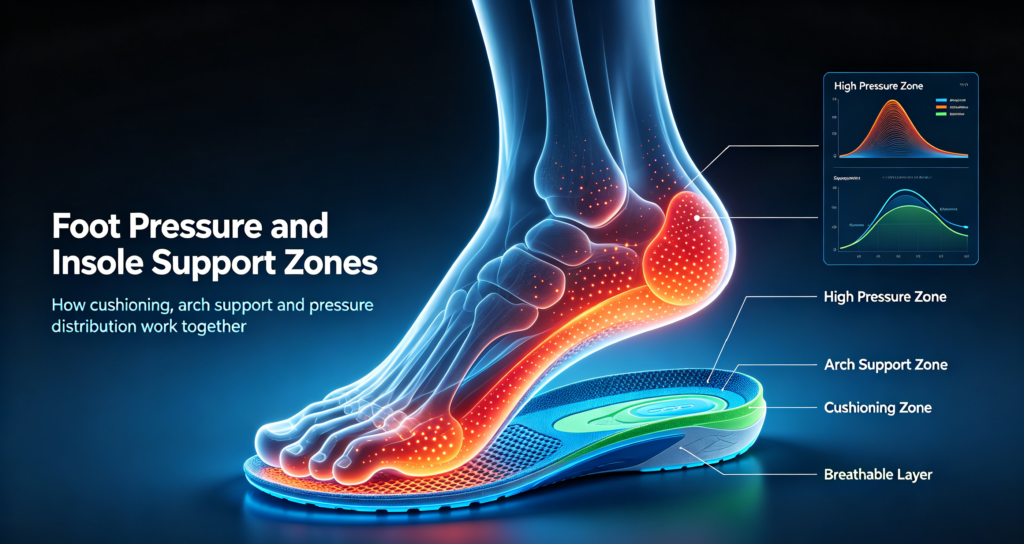
1. Understanding the Role of the Foot Arch
The foot arch is a natural structure that helps the body absorb impact and maintain balance during movement.
A healthy arch provides:
- Shock absorption
- Weight distribution
- Movement efficiency
- Foot stability
However, when the arch lacks sufficient support, users may experience discomfort caused by uneven pressure distribution.
Common situations include:
- Flat feet
- Fallen arches
- Overpronation
- Long periods of standing
- High-impact activities
For footwear companies, understanding these challenges helps develop more functional insole products.
2. Common Signs That Indicate a Need for Arch Support Insoles
2.1 Foot Fatigue After Standing or Walking
One common sign of insufficient arch support is excessive foot fatigue after daily activities.
Users who spend long hours standing or walking may experience:
- Tired feet
- Reduced comfort
- Pressure around the arch area
Arch support insoles help distribute pressure more evenly and provide additional structural support.
This makes them suitable for:
- Work footwear
- Safety shoes
- Hospitality footwear
- Everyday comfort shoes
2.2 Heel and Arch Discomfort
When the foot lacks proper support, pressure may concentrate in specific areas.
Common discomfort areas include:
- Heel
- Inner arch
- Forefoot
Supportive insoles are designed with cushioning and stability features to improve overall foot comfort.
2.3 Uneven Shoe Wear
The pattern of shoe wear can provide information about foot movement.
Uneven wear may indicate:
- Excessive inward rolling
- Poor foot alignment
- Uneven pressure distribution
For footwear brands, designing insoles with appropriate support structures can help address these common consumer concerns.
3. How Arch Support Insoles Improve Foot Comfort
3.1 Better Pressure Distribution
A major function of arch support insoles is improving how pressure is distributed across the foot.
Instead of concentrating pressure in specific areas, supportive insoles help create a more balanced contact surface.
Benefits include:
- Improved comfort
- Reduced pressure points
- Better walking experience
3.2 Improved Foot Stability
Arch support structures help maintain better foot positioning during movement.
Professional insoles may include:
- Reinforced arch areas
- Heel cups
- Stabilizing materials
These features are especially important for:
- Sports footwear
- Work boots
- Outdoor shoes
3.3 Enhanced Cushioning
Support and cushioning work together to create effective functional insoles.
Common cushioning materials include:
- EVA foam
- PU foam
- Memory foam
The combination of support and cushioning allows brands to develop products for different comfort requirements.

4. Different Types of Arch Support Insoles
For footwear brands, arch support insoles are not a single product category. Different users require different designs.
Low Arch Support Insoles
Designed for users with:
- Flat feet
- Fallen arches
- Mild support requirements
Features:
- Moderate arch support
- Flexible cushioning
- Comfortable daily use
Medium Arch Support Insoles
Designed for:
- General comfort footwear
- Sports applications
- Everyday walking shoes
Features:
- Balanced support
- Cushioning performance
- Wide market application
High Arch Support Insoles
Designed for users requiring:
- Stronger support
- Additional stability
- Pressure distribution
Common applications:
- Orthopedic footwear
- Professional support products
5. Materials Used in Arch Support Insoles
Material selection directly influences comfort, support, and durability.
Professional manufacturers often combine multiple materials to achieve better performance.
EVA Foam
EVA is widely used because of:
- Lightweight structure
- Shock absorption
- Adjustable hardness
Applications:
- Daily support insoles
- Sports insoles
- Comfort footwear
PU Foam
PU foam provides:
- Long-lasting cushioning
- Good resilience
- Premium comfort
Applications:
- Work footwear
- High-end comfort insoles
TPU and Carbon Fiber Support
Support components are often added to improve:
- Structural stability
- Arch reinforcement
- Shape retention
These materials are commonly used in performance and orthopedic applications.
6. Applications of Arch Support Insoles in Different Markets
Sports Footwear
Sports brands use arch support insoles to improve:
- Stability
- Cushioning
- Movement comfort
Applications include:
- Running shoes
- Training shoes
- Outdoor footwear
Work and Safety Footwear
Workers often require additional support due to long periods of standing.
Arch support insoles help improve:
- Daily comfort
- Foot stability
- Pressure management
Comfort and Orthopedic Footwear
Growing consumer demand for wellness products has increased opportunities for:
- Orthotic footwear brands
- Footcare companies
- Comfort shoe manufacturers
7. Custom Arch Support Insole Manufacturing Considerations
For B2B buyers, developing arch support insoles requires careful product planning.
Important considerations include:
Support Structure Design
Manufacturers need to evaluate:
- Arch height
- Support firmness
- Footwear compatibility
Material Combination
Different materials provide different performance characteristics.
Examples:
- EVA cushioning layer
- TPU support frame
- Fabric top layer
Production Quality Control
Professional inspection should include:
- Shape accuracy
- Material consistency
- Bonding quality
- Product durability
A reliable production process ensures stable quality for international markets.

8. Why Choose S-King for Custom Arch Support Insoles?
S-King specializes in customized insole development and manufacturing for global footwear brands, distributors, and professional footcare companies.
S-King helps customers develop functional insole solutions for:
- Arch support
- Flat feet
- Pronation control
- Sports footwear
- Work footwear
Customized Product Development
S-King supports:
- Material selection
- Structural design
- Prototype development
- Custom molds
- Private label production
Multiple Material Solutions
Available options include:
- EVA foam
- PU foam
- Memory foam
- Carbon fiber
- TPU support structures
This allows brands to create different levels of comfort, support, and performance.
OEM & ODM Manufacturing Support
S-King provides:
- Product customization
- Production management
- Quality inspection
- Packaging support
For brands looking for a reliable arch support insole supplier, S-King provides complete OEM and ODM solutions from concept to production.
Conclusion
Arch support insoles play an important role in improving footwear comfort, stability, and customer satisfaction.
For footwear brands and professional buyers, developing successful support insoles requires the right combination of ergonomic design, material selection, and manufacturing expertise.
With customized OEM and ODM capabilities, S-King helps global companies develop high-quality arch support insoles for different footwear markets and customer needs.


