A sample is not a small production run. It is built on different tooling, at a different pace, to answer a different question — and a buyer who treats it as a preview of the order will read it the wrong way. Sampling exists to convert assumptions into objects you can test: does the geometry sit in the shoe, does the foam behave under load, does the laminate survive flexing.
The most common mistake at this stage is approving on feel. A sample arrives, everyone in the room likes it, the approval goes out — and nobody wrote down what was approved or kept the reference. Months later, a production batch is “different”, and there is nothing to compare it against. Approval is a specification event, not a compliment.
What Sampling Is Actually For
Every sampling round exists to answer one question cheaply. Geometry is cheap to change on a screen and expensive to change on steel, so the rounds are ordered to test the cheapest-to-change assumptions first and lock them before the next assumption is tested. That ordering — not the samples themselves — is the actual process.
This is why “how long will sampling take” is the wrong opening question. The duration is an output of how many questions your program needs answered and how many answers come back wrong. What a buyer controls is the quality of the inputs: the spec you bring to the first meeting decides how many rounds you are signing up for. The upstream decisions are covered in the five questions to settle before mold development starts.
The Sample Line Is Not the Production Line
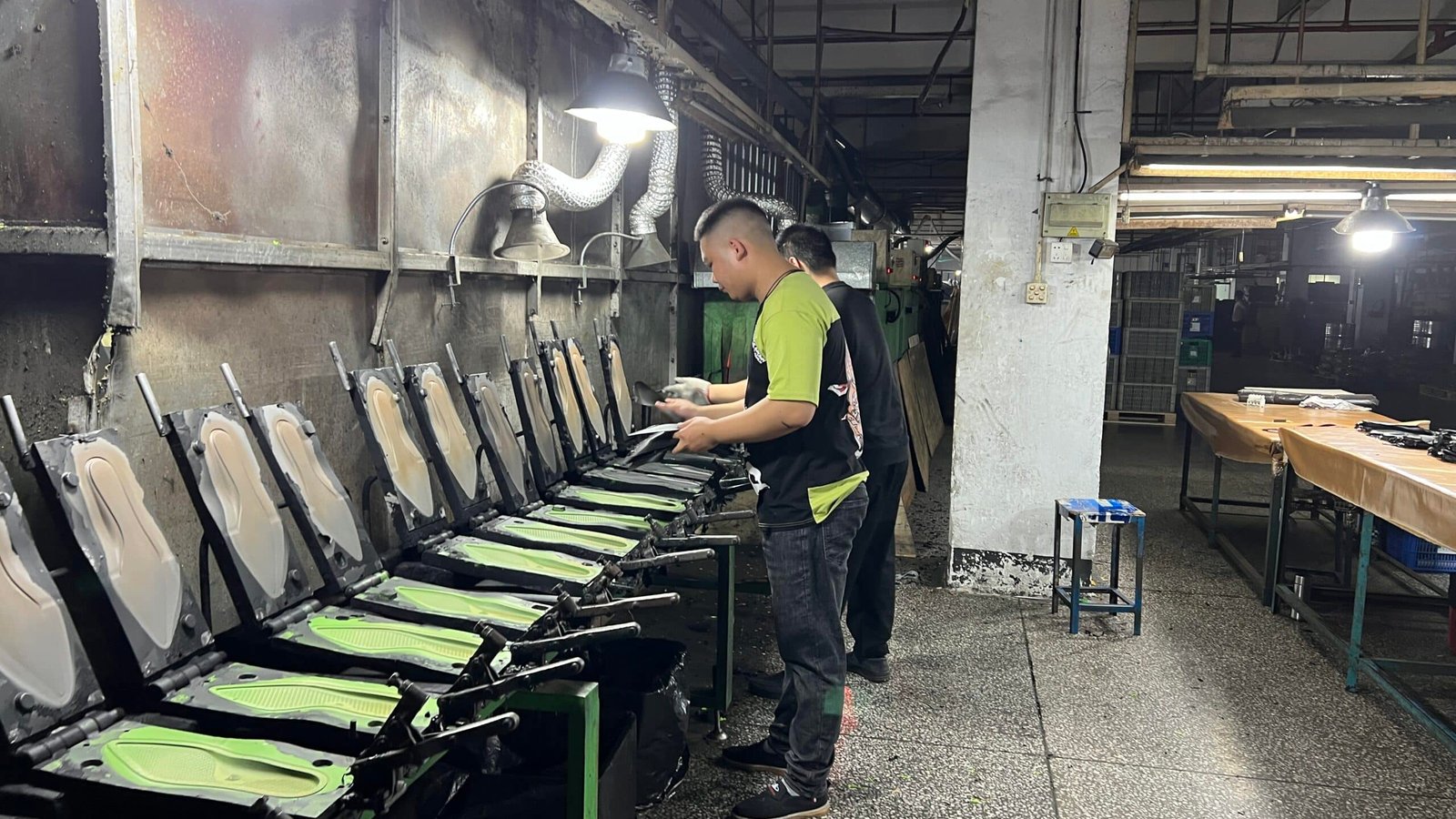
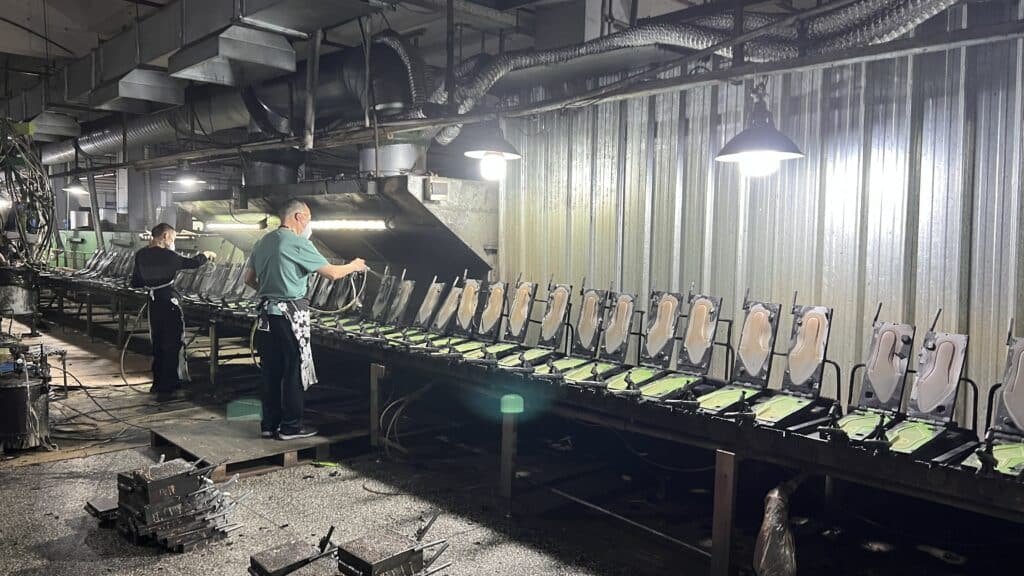
Samples are usually made on sample tooling — soft tooling or single-cavity molds — running on lines configured for flexibility rather than volume. The production line is tuned for repeatability: cycle times, temperature stability, cavity-to-cavity consistency. Two practical consequences follow.
First, a perfect sample is a hypothesis, not a result. It proves the design can be made; it does not yet prove the production line can make five thousand of them consistently. Second, small differences between sample and production pieces are normal and expected — which is exactly why the final round should be a pre-production sample made the way the order will be made. Approving a sample-line piece as if it were a production piece is where many disputes begin.
What Each Round Is Actually Testing
Round one: geometry and fit. Does the insole sit in the shoe, hold the heel, match the arch? Nothing else matters until this is yes — and this is the cheapest round to redo, because nothing has been machined against it yet.
Round two: material behavior. How the foam actually responds under load — cushioning, support, recovery. This is where the spec numbers from the material decision get tested against reality rather than against a datasheet.
Round three: construction. Lamination bonds, top cover fit, edge finish, stitching where it exists. Multi-layer programs live or die here, because the layers are the failure point in the field.
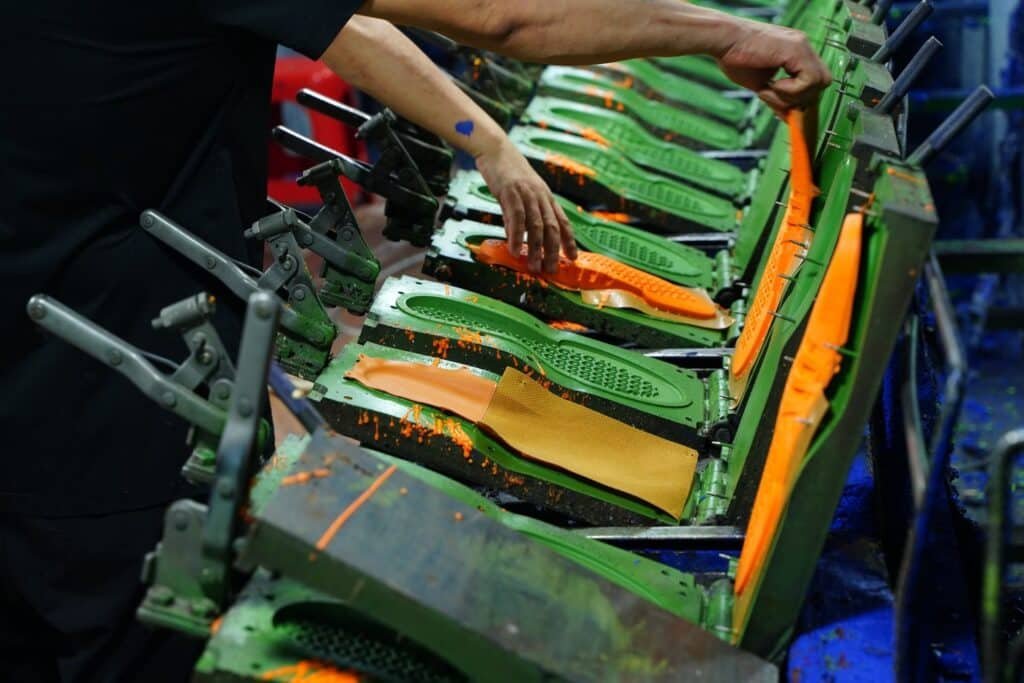
Round four: the pre-production sample. Made on production tooling, on the production line, with the production material lot. This is the piece that becomes the golden sample — the physical reference the whole program is judged against from here on.
What Revisions Cost — and When
The cost of a change is almost entirely a function of when it is requested. The same revision that is trivial in week one is expensive in week six, and the pattern is predictable enough to put in a table.
| Revision | What actually changes | Relative cost | When it is still cheap |
|---|---|---|---|
| Screen / CAD change | Thickness map, outline, arch profile in the model | Low | Any time before tooling is cut — the cheapest change there is |
| Material or density change | The spec, then a re-run on the sampling line | Medium | Before the mold exists; after machining, shrinkage must be re-checked |
| Geometry change after machining | Re-machined cavities or new tooling | High | Almost never — this is the change to design out in round one |
| Construction change | Lamination, cover, finishing process | Low to medium | Often possible mid-program, since tooling is usually not touched |
The underlying rule is the one that governs the whole tooling stage: revisions belong in CAD, not on steel. Every change pushed later in the sequence costs more, not because anyone is charging for effort, but because the change physically propagates into objects that already exist.
What “Approved” Should Mean
Approval only means something if three things are true. First, there is a retained golden sample — a physical reference, made the way the order will be made, kept by both sides. Second, the spec numbers behind it are written down: densities, hardness with scale and thickness, the values behind the material decisions. Third, the sign-off is explicit — an email that says “approved as per sample #3 with spec v2”, not a forwarded “looks good”.
With those three in place, “different” becomes a measurable claim instead of an argument. Without them, every later batch is renegotiated by memory. The documents that carry this are listed in what to include in an insole manufacturer RFQ — and the numbers that belong in the spec are covered in custom insole testing.
Manufacturer Insight
The discipline that saves more programs than any other, on our side, is keeping the golden sample honest. It is tempting to let the “golden” reference drift — a sample here, a tweak there — until nobody, including us, can say what the approved version was. When both sides hold the same sealed reference and the same spec sheet, disputes about the third batch take minutes instead of weeks.
The pattern we see in difficult programs is almost always the same one: approval by feel, no retained reference, no written numbers. And the pattern in smooth ones is boring in the best way — round one confirms fit, the spec is updated once, and the pre-production sample matches because nothing was ever left undefined. Sampling rewards the buyer who writes things down. It quietly taxes the one who does not.
Frequently Asked Questions
How long does insole sampling take?
It depends on three variables: the tooling scope, the construction, and how many rounds of revision the answers require — so a single number quoted before those are fixed means very little. Ask for a milestone plan instead of a duration, and treat each round as answering a defined question. That is also the honest way to compare suppliers’ quotes.
What is a golden sample?
The pre-production sample, made on production tooling with production materials, that both parties retain as the physical standard for the program. Every later batch is compared against it — visually and by the spec numbers. One signed reference on each side is worth more than any amount of email description.
Can we skip sampling and go straight to production?
Only when the geometry already exists — private label on an established mold can start from a short confirmation sample, with MOQ from 100 pairs. A full custom program should not skip it: sampling is where the cheapest corrections are possible, and skipping it moves those corrections into production, where nothing is cheap.
Who pays for extra revision rounds?
There is no industry default — it is a contractual question, and it should be settled in the RFQ before sampling starts. The usual anchor is ownership of the change: a buyer-initiated design change and a supplier-side execution error are different events. Agreeing this after the rounds have started removes everyone’s leverage, so put it in writing early.
The Short Version
- Sampling is a question-answering process on different tooling — sequence the rounds so the cheapest-to-change assumptions are tested and locked first.
- Push revisions as early as possible: screen changes are cheap, machined-steel changes are not, and the same edit changes price depending on when it lands.
- Approve against a retained golden sample plus written numbers — that is what turns later “different” claims into measurements instead of arguments.
Sampling sits in the middle of a sequence that starts earlier and ends later: the tooling decisions are covered in how insole mold development works, and the trade-off between developing from scratch and starting from an existing product is in custom insole manufacturer vs wholesale supplier. Our OEM/ODM page shows how the sampling stage fits the full development service. If you have an application in mind, send us the shoe type and the mileage target — we will tell you what the sampling plan would need to answer.